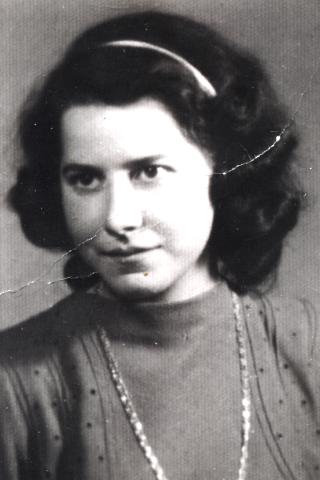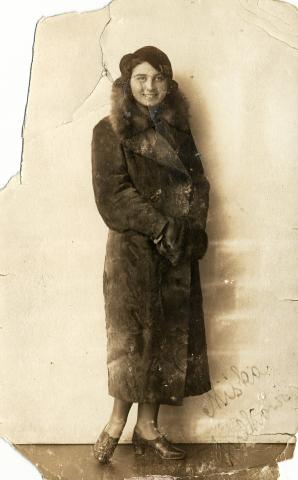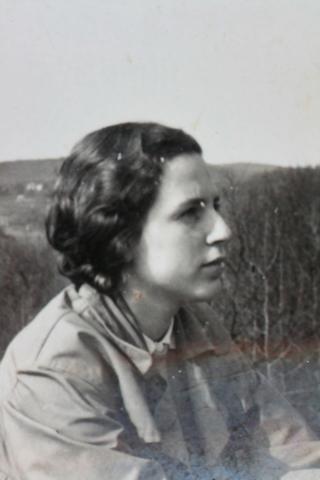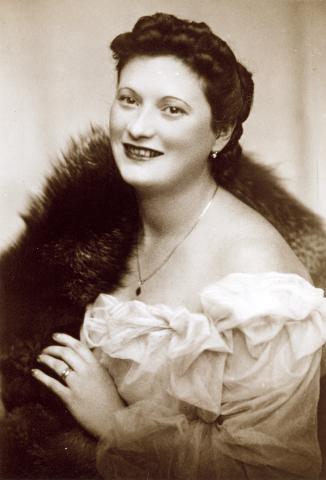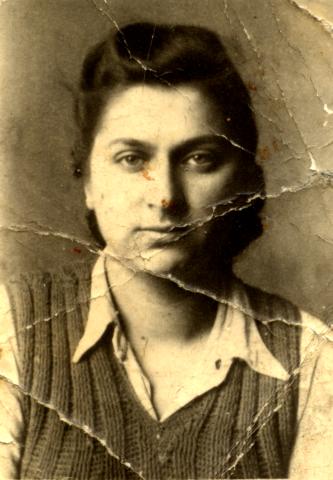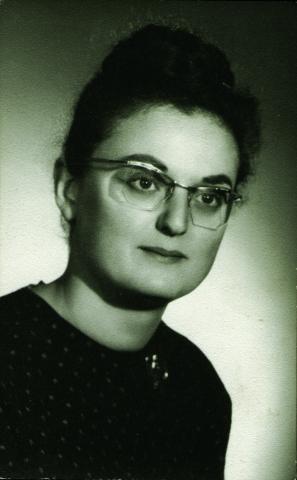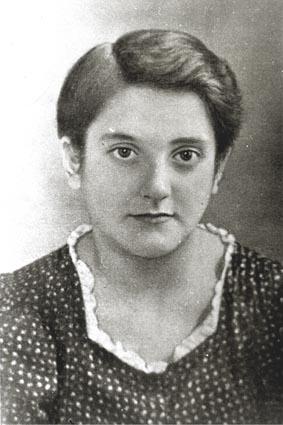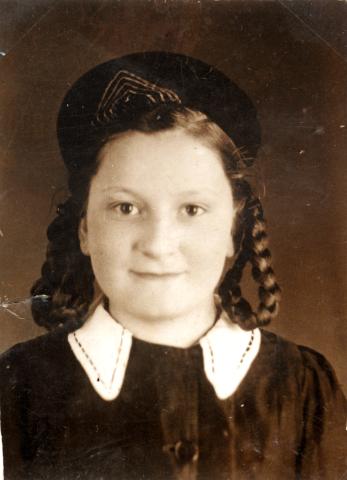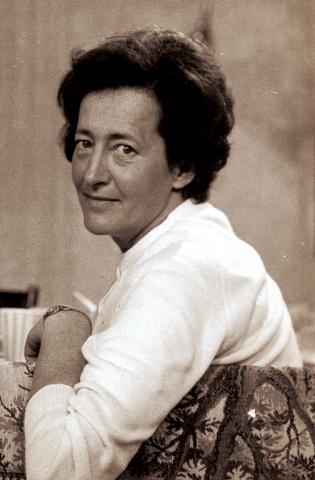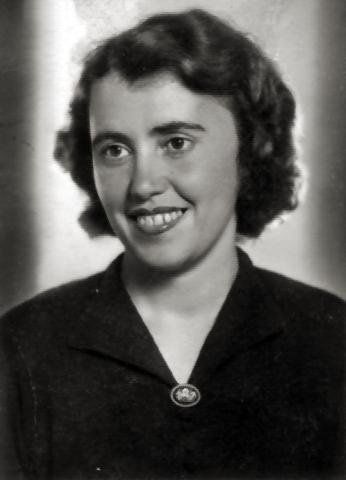
Elvira Kohn
Elvira Kohn was born in 1914 in Rijeka, Croatia, into a middle-class Sephardic Jewish family. The next year her family moved to Vinkovci, Croatia.
Full Centropa interview
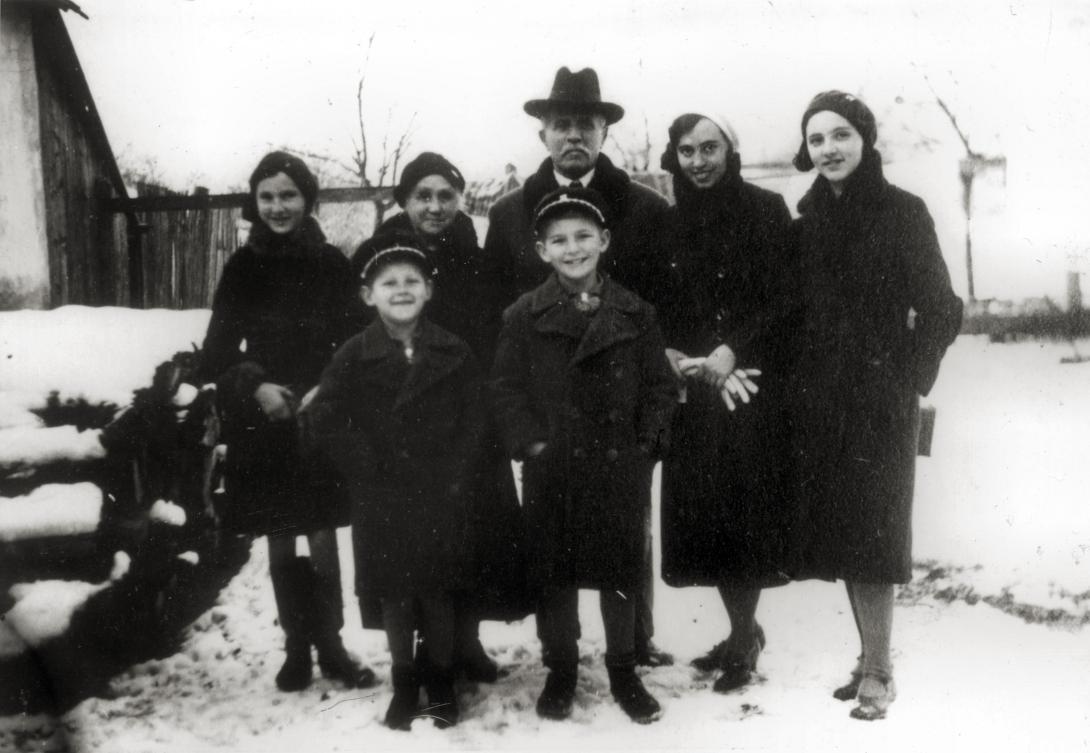
Elvira Kohn with her maternal grandparents and cousins
Family and Childhood
"We weren't very religious, but there were certain elements of the Jewish religion and traditions that we respected. There was no pork in the house; that was strictly forbidden. We never had pork.
Otherwise, the meat we ate wasn't kosher; at least I don't think it was slaughtered according to the strict kashrut rules. My grandmother and mother cooked on Friday for Saturday so we didn't cook on Saturday. They prepared challah for Friday night and for Saturday. We lit candles Friday night and had a festive meal, usually fish, chicken soup and chicken. We had red wine.
On Saturday, we always ate cholent, which was prepared the day before."
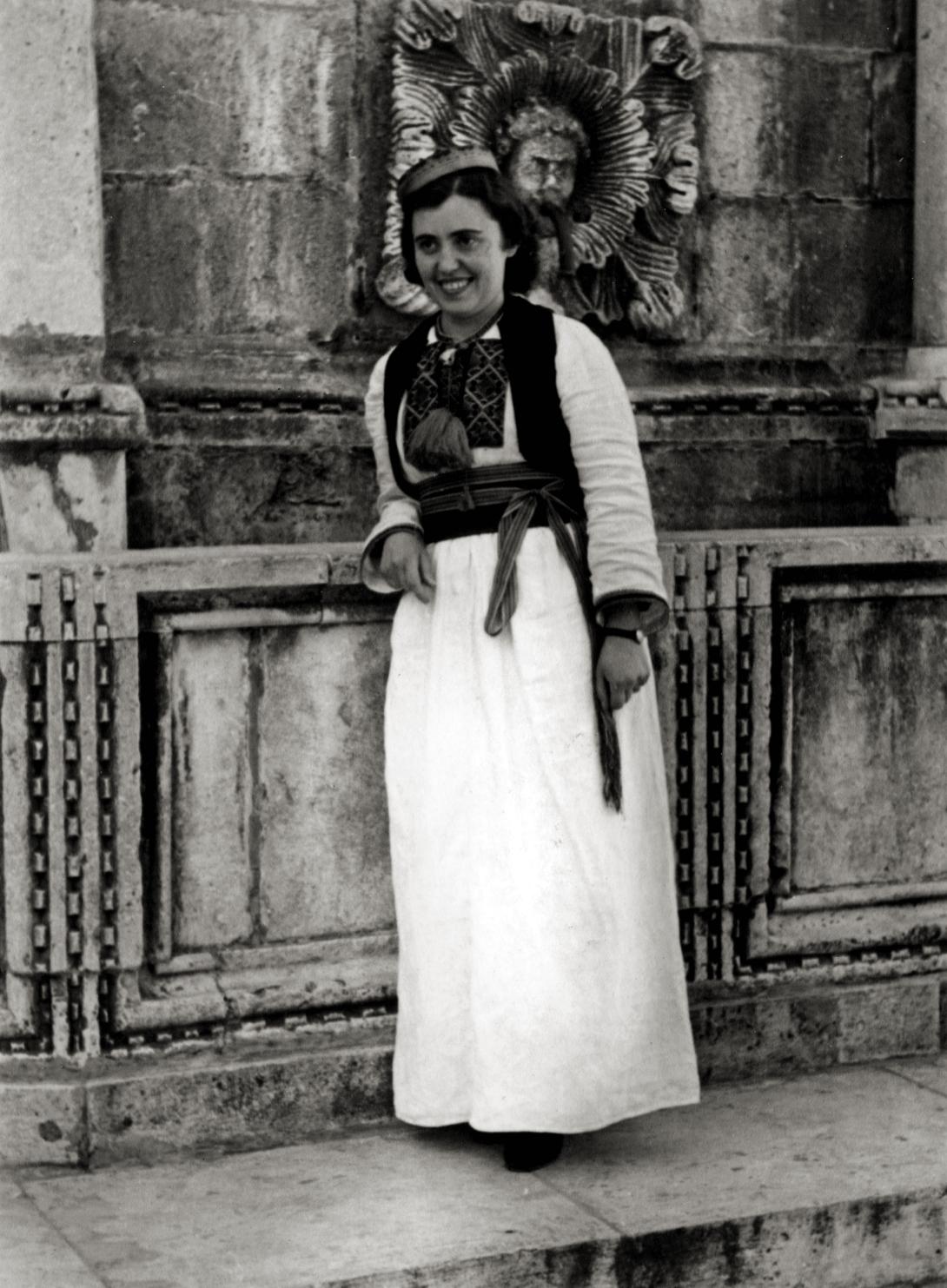
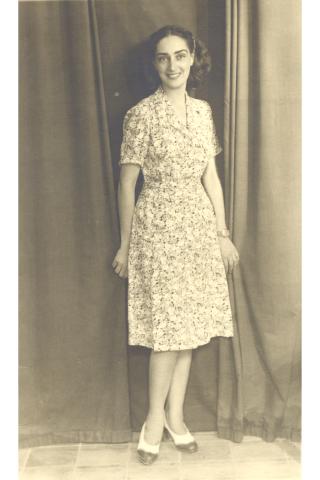
Elvira Kohn in a traditional Dubrovnik dress
Life before the War
"In Vinkovci, I completed the public elementary school, four grades of public high school and after that I learned photography in a private photographer's shop called Seiler. In this photo studio, I learned the trade and became a qualified photographer. I was very much interested in photography and I learned to love this art form very much.
I left for Dubrovnik in 1932.
I worked in the photo studio. My main duties were to take photos of various daily events that were taking place in Dubrovnik and its surroundings: cultural happenings, political events, events related to the church, such as mass, baptism, or other church-related events. Sometimes people asked me to take photos of their children at birthday parties, or when a child was born."
The Outbreak of the War
"In general, I have great respect for the citizens of Dubrovnik in how they treated the Jews during the war. They were very fair to us. I never hid the fact that I was Jewish.
There was a Jewish community and a synagogue on Zudioska Street. I think there were about one hundred Jews in Dubrovnik. I didn't take part in the life of the community that much. I always attended the services and celebrations on main holidays but that was about it. It was a Sephardi community.
I didn't feel much anti-Semitism in Dubrovnik before the war. Perhaps right before the war started, anti-Semitism was felt more individually than collectively.
… in addition to wearing the badge, we were forbidden to work in state and public services, and we were deprived of the freedom of passage. We were allowed to go to the beach or to the market only until a certain time of the day; a curfew was imposed on us.
In Dubrovnik, the state power was in the hands of the Croats, i.e. of the Ustashas, and the military power was in the hands of the Italians. "
Surviving the War
"The Jewish community informed all the Jews living in Dubrovnik, the Jews who by accident happened to be there, and the Jews who came to Dubrovnik to run away or hide, that on a certain day in November 1942 we would be taken away and that we could take with us what we thought was necessary. I was with my mother. We were taken aboard a large Italian passenger ship and many people of Dubrovnik came to see us off.
We were first taken to the hotel Vrek in Gruz, a few kilometers from Dubrovnik. There we stayed for two months and at the beginning of January 1943 we were taken to Kupari. There were around 1200 Jews."
"Italy capitulated on 8th September 1943…
When the partisans arrived from Crikvenica on the Island of Rab, whoever wanted to join the partisans could join them.
I immediately decided to join the partisans. They asked every one of us individually what we wanted, where we wanted to go, which brigade we want to join, what our profession was. I told them I was a professional photographer, and that I had a camera, that I had a Leica.
They were very surprised to hear this, and very glad, so they invited me to join the advertising and public-relations department of ZAVNOH."
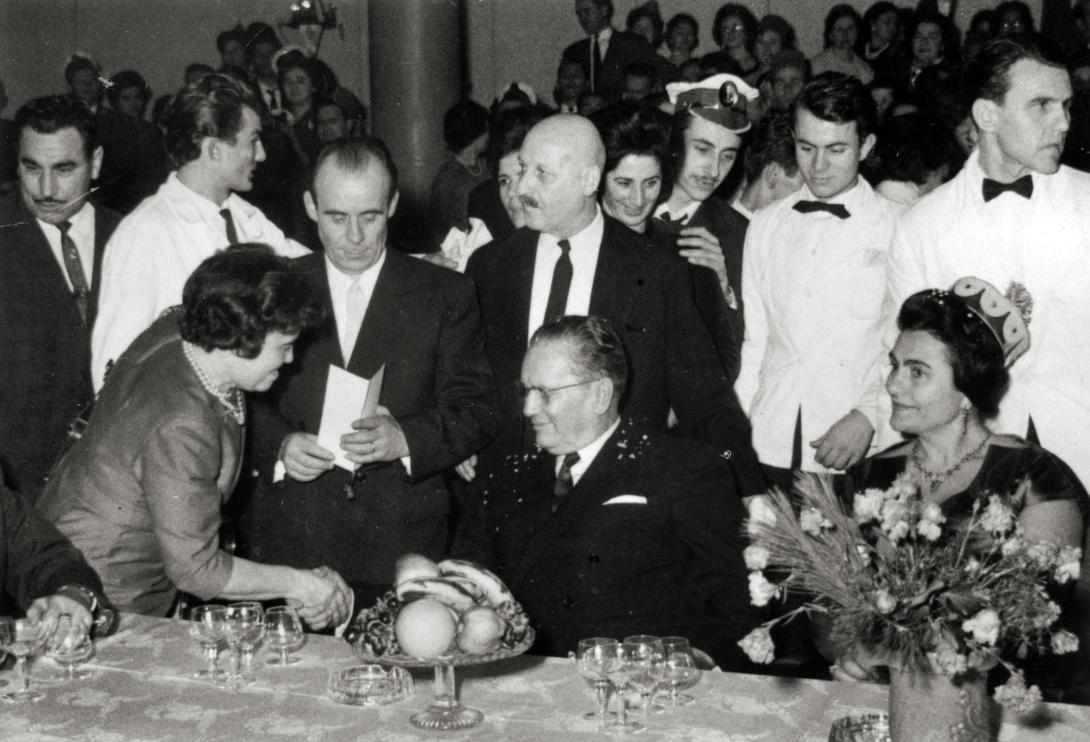
Elvira Kohn with Josip Broz Tito
Life after the War
"In my work, I often met JNA officials and important people; once I met Josip Broz Tito.
Even after I retired in 1964, I continued taking photographs privately and enjoying photography as an art form. I donated my photographs and negatives to the Croatian History Museum, and they are still kept there today."
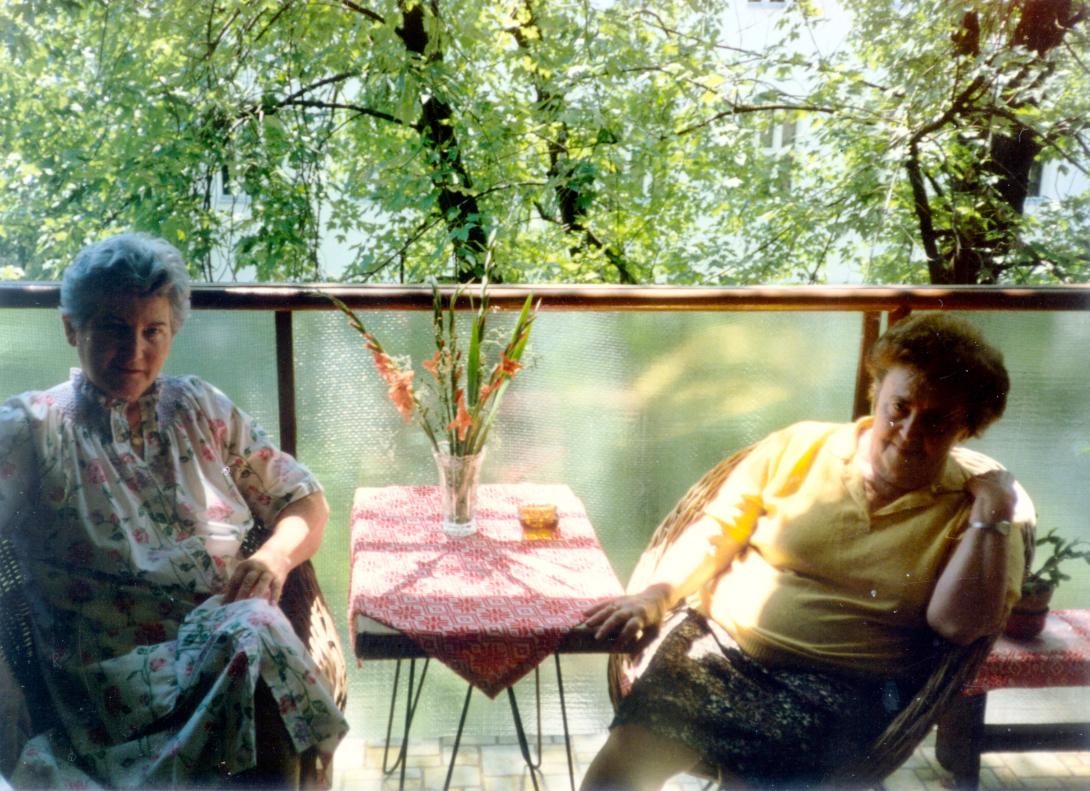
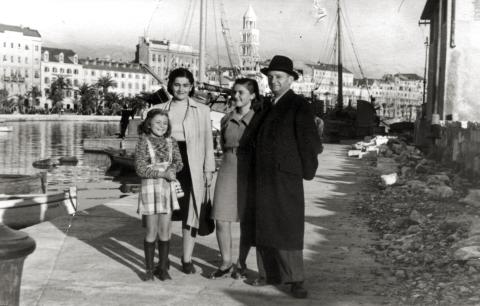
Elvira Kohn with a friend
"I lived with my mother until her death in 1977. The two of us were very close, and it was difficult for me when she died. I was left alone; I had no relatives, no family of my own. I was also in a dilemma as to how to bury my mother. It was a very difficult decision for me to make.
Many JNA officials and my co-workers came to my mother's funeral. Some gave a speech. I couldn't have a rabbi bury her in front of the party members. And I couldn't have the party members speak in front of a rabbi. The two don't go together. So at last I decided not to have a rabbi at the funeral. It wasn't easy, but there was no other choice. I wasn't allowed to have a Jewish funeral for my mother.
But I did something else. I arranged with the community that for the whole first month after my mother's death, the Kaddish was recited for her every Friday and Saturday. That was something I could do. "