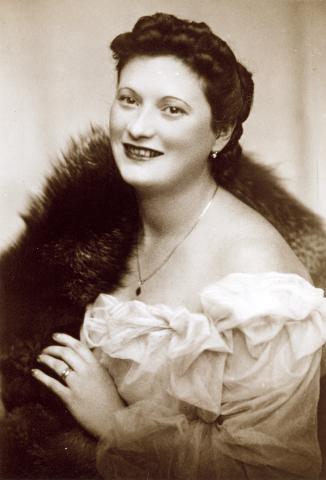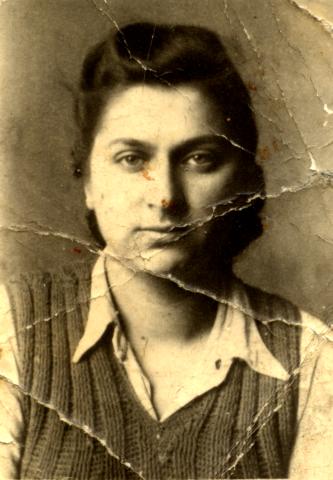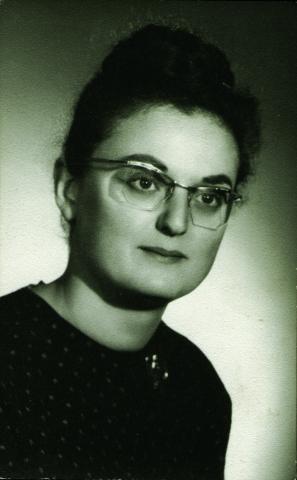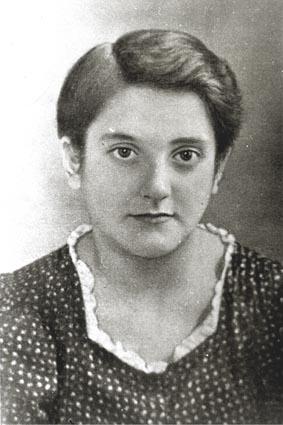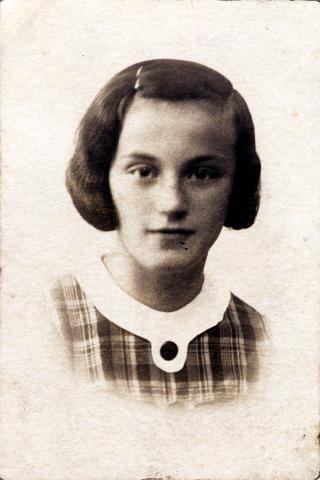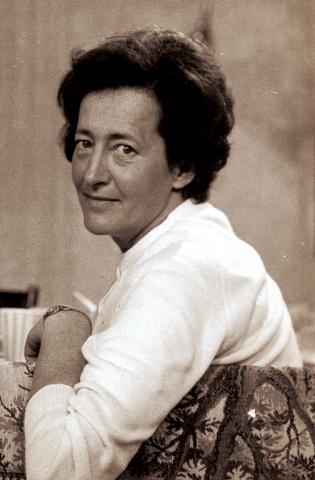
Vera Amar
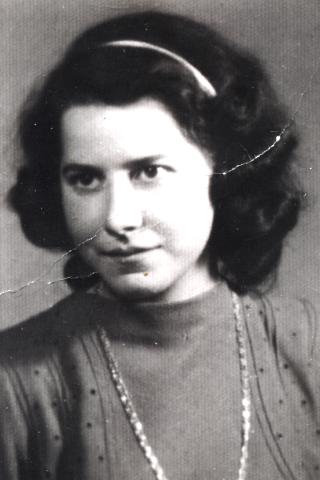
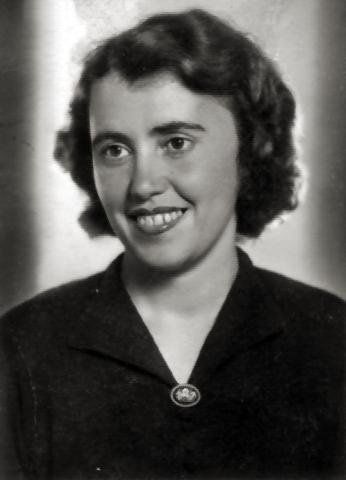
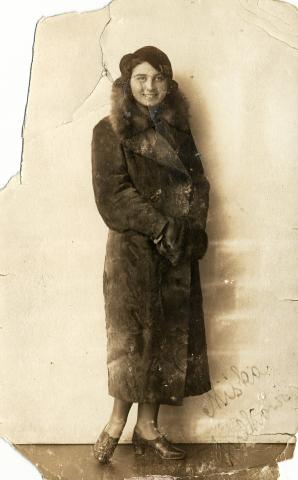
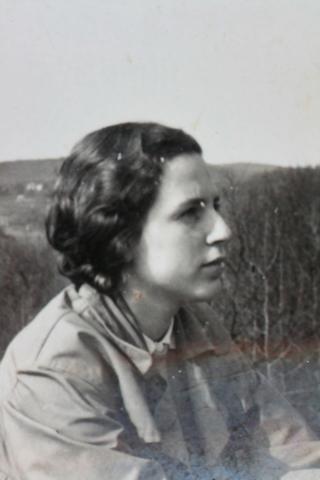
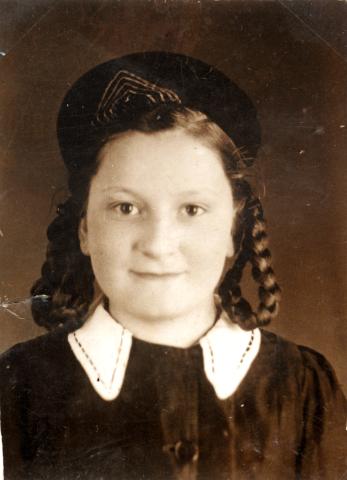
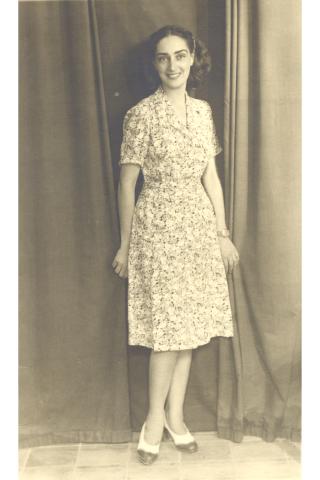
Vera Amar was born in 1923 in Belgrade into a family of mixed heritage. Her father Nikola Mikloša Vajda was a financial expert of Hungarian origin.
Biography of Vera Amar
Vera Amar, born Vera Vajda on June 22, 1923, in Belgrade, was one of the important witnesses to the history of the Jewish community in Yugoslavia before, during, and after the Second World War. Through her memories, it is possible to understand not only the tragedy of the Holocaust, but also the rich cultural and social life that existed among Belgrade Jews before the war. Her life story reflects themes of family, identity, survival, resilience, and the importance of memory.
Vera lived through dramatic historical events that shaped the twentieth century. She experienced a happy childhood in pre-war Belgrade, the destruction of her world during the Nazi occupation, the loss of close family members, and later the rebuilding of life in socialist Yugoslavia. Despite unimaginable suffering, she remained deeply connected to culture, family life, and eventually to Judaism itself. Her testimony today serves as an important historical document and a personal reflection on survival and identity.
Family Origins and Early Childhood
Vera was the eldest of three children born to Nikola Mikloša Vajda and Miroslava Torbić. Her father was Jewish and originally from Hungary, while her mother was Serbian. The family represented a mixed marriage at a time when cultural and religious coexistence was common in Belgrade. Vera often emphasized that mutual respect defined the relationship between her parents. Neither parent wanted to offend the traditions or beliefs of the other, and this atmosphere of tolerance deeply influenced her upbringing.
Her father came from a Jewish family in Hungary. He studied in Vienna and later moved to Belgrade, where he established a successful professional career. He worked in several important companies and became a respected financial expert and manager. Vera described him as intelligent, disciplined, hardworking, and extremely gentle with his family. He worked long hours but remained devoted to his wife and children.
Her mother came from a poor Serbian family and had lost her own parents during the First World War. Although her childhood had been difficult, she created a warm and loving home for her children. Vera remembered her mother as elegant, caring, and emotionally strong.
The family moved several times within Belgrade, living mostly in Dorćol, the historic neighborhood that was home to a large Jewish population. Vera remembered the atmosphere of Dorćol as lively, intimate, and safe. Most of the people around her were Jewish families, and everyday life was strongly influenced by Jewish customs, traditions, and social ties.
As a child, Vera enjoyed a carefree life. She spent her days playing with her brothers in the streets, riding bicycles and roller skates, and visiting Kalemegdan. She described childhood in Belgrade during the 1930s as peaceful and disciplined. Children respected adults, family life was highly organized, and schools maintained strict discipline.
Although her family did not strictly practice religion, Jewish identity was present everywhere around her. She loved going to the synagogue, especially during weddings and celebrations. The beauty of the ceremonies, music, and festive atmosphere attracted her from a very young age. She later realized how emotionally connected she had always been to Judaism, even when religion was not actively practiced inside her own home.
Jewish Community in Pre-War Belgrade
Vera’s memories provide valuable insight into Jewish life in Belgrade before the Holocaust. The Jewish community was highly integrated into Serbian society, yet it preserved a strong communal identity. Jews participated actively in business, culture, education, and public life.
According to Vera, relations between Jews and Serbs were generally very good. Families visited each other during holidays and social events, and coexistence was natural. She remembered that Jewish and Serbian traditions existed side by side in her everyday life. In school she celebrated Serbian holidays such as Saint Sava Day, while in her neighborhood she experienced Jewish customs and the atmosphere of Shabbat.
Dorćol, where she spent much of her childhood, had a distinctly Jewish character. Many of her classmates, friends, and neighbors were Jewish. Vera often described the community as one large family where people knew and supported one another. Jewish businesses, social clubs, and synagogues played an important role in daily life.
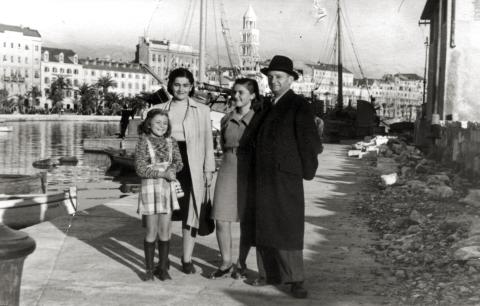
Her father’s professional success allowed the family to enjoy a comfortable middle-class lifestyle. During summers, Vera, her brothers, mother, and housekeeper traveled to the Adriatic coast, visiting places such as Herceg Novi, Igalo, and Kumbor. These memories remained especially important to her because they represented the final years of happiness before the war destroyed their lives.
The Collapse of Life During the War
The German invasion of Yugoslavia in April 1941 marked the end of Vera’s peaceful childhood. She was only seventeen years old when the Nazi occupation began. Almost immediately, anti-Jewish persecution transformed daily life in Belgrade.
Her father and many other Jewish men were arrested and sent to forced labor and detention camps. Eventually, her father Nikola and his brother Martin were imprisoned in the Topovske Šupe camp in Belgrade. Vera and her mother visited the camp every day for weeks, bringing food and desperately hoping to maintain contact with him.
The conditions in the camp were terrifying. Prisoners and visitors were separated by guards, fences, and strict controls. Vera vividly remembered the noise, confusion, fear, and desperation that surrounded these brief meetings.
One of the most traumatic moments of her life was the final time she saw her father. While leaving the camp after a visit, she approached the fence one last time to look at him. A German guard fired shots near her feet and later near her head in order to force her away. Her father screamed at her to leave before she was killed. The next day, when Vera returned with food, the guards informed her that he had supposedly been sent to Germany for work. Only later did she learn that he had actually been executed.
The destruction of her family extended far beyond Belgrade. Many of her relatives in Hungary also perished during the Holocaust. Entire branches of the Vajda family disappeared. The tragedy reflected the broader fate of European Jewry during the war.
Survival and Fear Under Occupation
During the occupation, survival depended on constant caution, luck, and improvisation. Vera married a Serbian man at a very young age and took his surname, which provided a certain degree of protection. She also became the mother of her first son, Slobodan, during the war years.
Nevertheless, she lived in continuous fear. She was arrested and interrogated several times during police raids organized by collaborationist authorities in Belgrade. Because she no longer had a Jewish surname, she managed to convince officials to release her. She later admitted that youth, quick thinking, and courage helped save her life.
Her two younger brothers also narrowly escaped death several times. Neighbors sometimes warned the family before Gestapo raids, giving the boys time to hide. Eventually, both survived the war, completed their education, and became engineers.
The war years left deep psychological scars on Vera. Her happy childhood disappeared almost overnight, replaced by fear, uncertainty, hunger, and loss. Yet despite these hardships, she managed to survive and later rebuild her life.
Rebuilding Life After the War
After the liberation of Belgrade, Vera slowly began rebuilding her future. One of the most important turning points in her life came when she met Isak Bata Amar at the National Theatre in Belgrade, where she attended the Drama Studio.
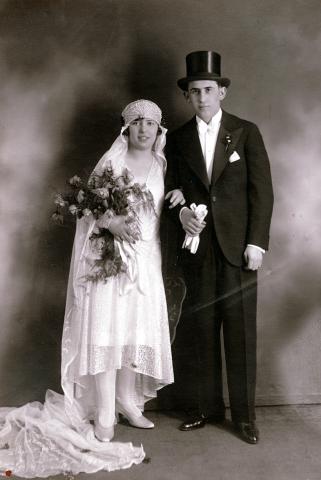
Their relationship developed quickly, and they married in 1947. Isak Amar came from an Orthodox Jewish family that had also suffered devastating losses during the Holocaust. Most of his relatives had been killed, and he returned from the war almost completely alone.
Vera often described Isak as a calm, intelligent, and deeply charismatic man. Their marriage brought emotional stability and happiness after years of suffering. Importantly, Isak accepted Vera’s son from her first marriage completely as his own child. Together they later had another son, Zoran.
Both Vera and Isak dedicated much of their lives to culture and the arts. Vera worked in cultural institutions, publishing, journalism, television, and theater-related activities. Isak worked in law and culture and remained active in the Jewish community throughout his life.
The couple participated in many activities organized by the Jewish Community of Belgrade. Vera sang in the Jewish choir and traveled to Israel several times. Through these experiences, she strengthened her connection to Jewish history, tradition, and identity.
Rediscovering Judaism
As she grew older, Vera increasingly felt the need to reconnect spiritually with Judaism. Although she had always emotionally identified as Jewish, according to religious law she was not considered Jewish because her mother was Serbian.
Eventually, she decided to formally convert to Orthodox Judaism in Israel. The process was deeply meaningful to her and represented the fulfillment of a lifelong emotional journey. During the conversion process, she was asked why she wished to become Jewish. She answered simply that she had always felt Jewish in her heart.
She chose the Hebrew name Judita in honor of her grandmother, whom she had barely known but always felt emotionally connected to. After the conversion, Vera began fully observing Jewish religious life. She kept kosher, observed Shabbat, attended synagogue regularly, and celebrated Jewish holidays.
For Vera, Judaism became not only a religion but also a source of peace, identity, continuity, and healing after decades marked by trauma and loss.
Legacy and Historical Importance
The testimony of Vera Amar is extremely important for understanding the history of Jews in Serbia and the former Yugoslavia. Her memories preserve details of everyday life that disappeared almost entirely after the Holocaust. Through her story, later generations can better understand both the richness of Jewish life before the war and the devastating human consequences of Nazi persecution.
At the same time, her biography is not only a story about suffering. It is also a story about resilience, dignity, family love, and the ability to rebuild life after catastrophe. Vera Amar survived the destruction of her world, created a new family, contributed to cultural life, and eventually found spiritual fulfillment.
Her life remains a powerful reminder of the importance of memory, tolerance, and human connection.