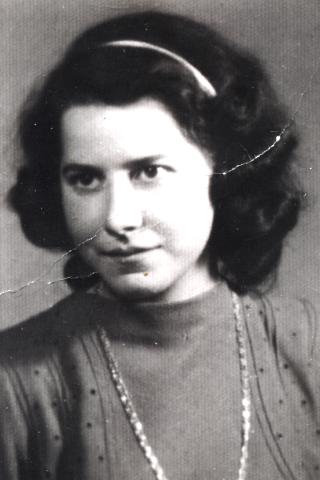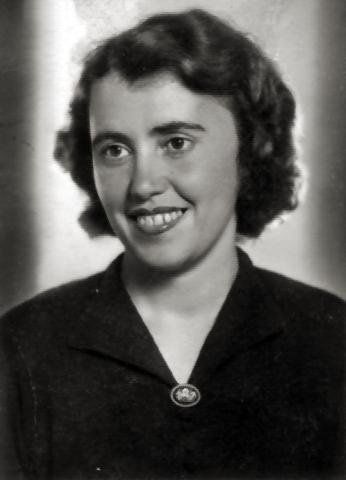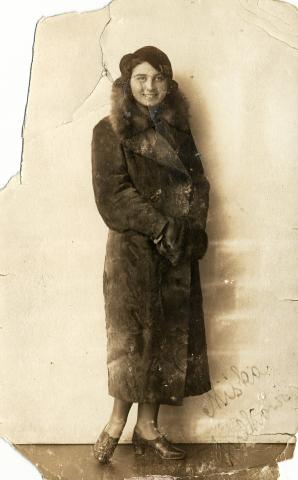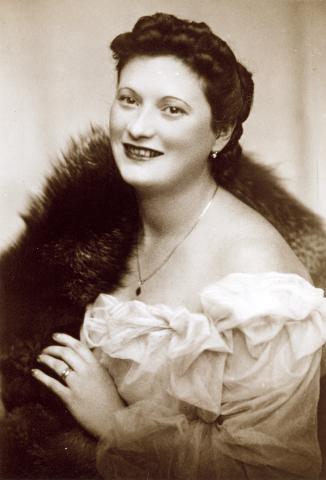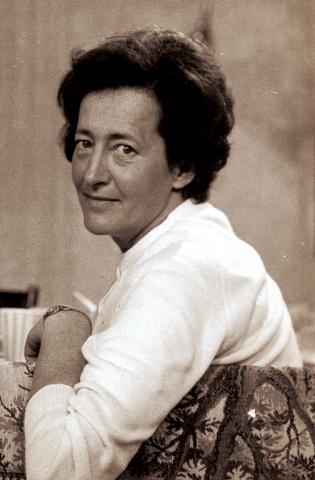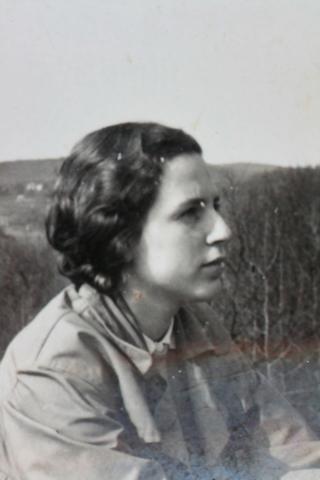
Erna Goldmann
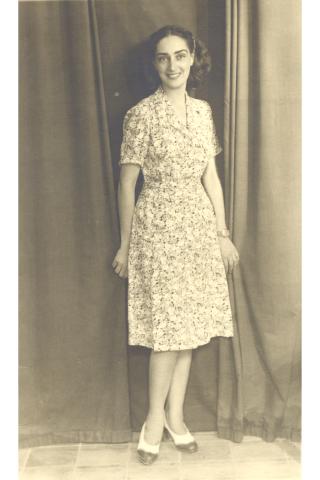
Erna Goldmann was born on December 22, 1917 in Frankfurt am Main as the youngest child of Theodor Guggenheim and his wife Rosa, née Rapp.
Make sure to view the Centropa film about Erna Goldmann
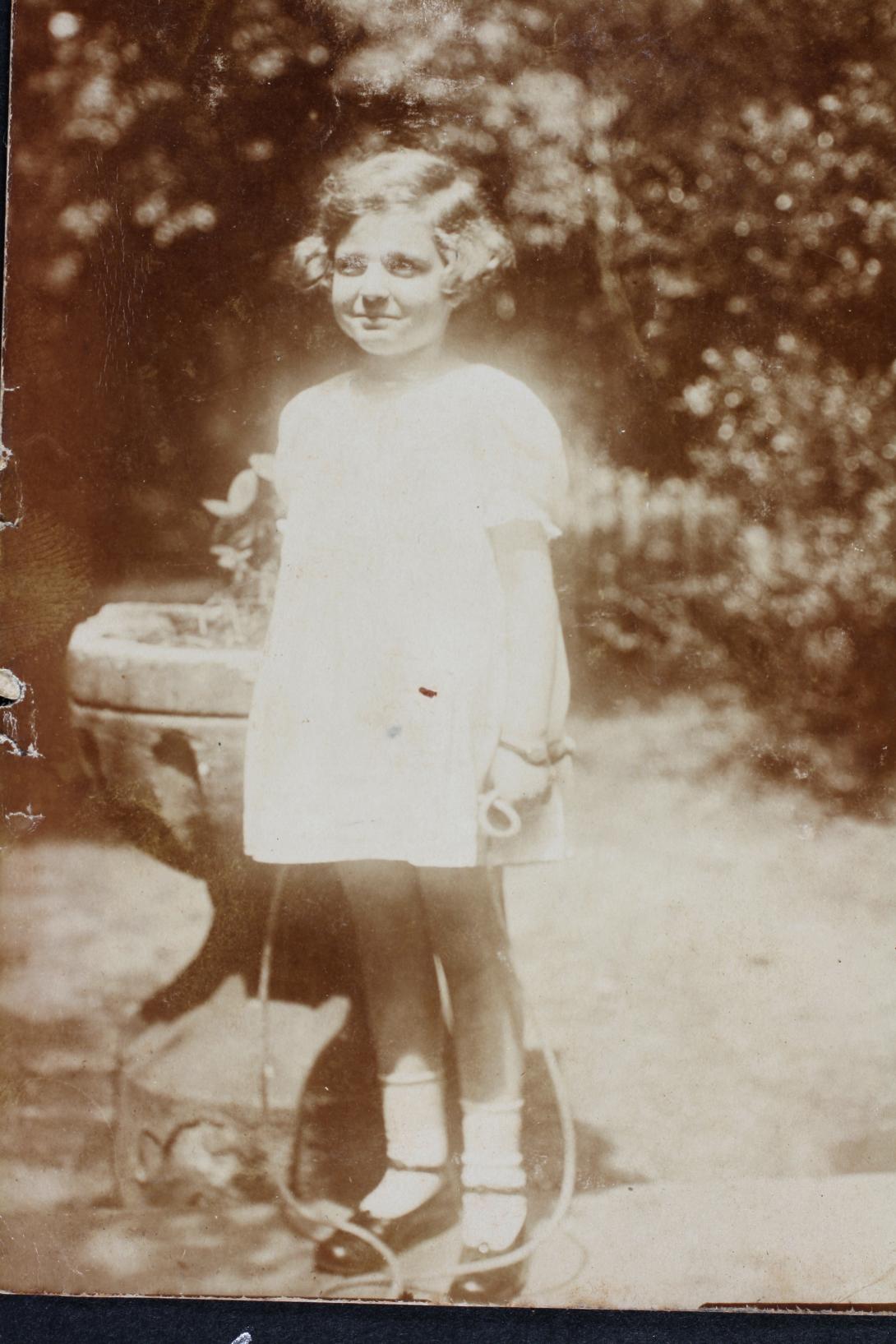
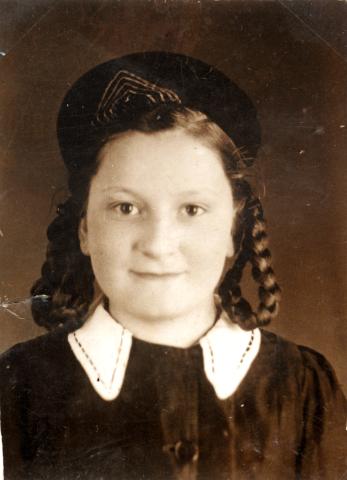
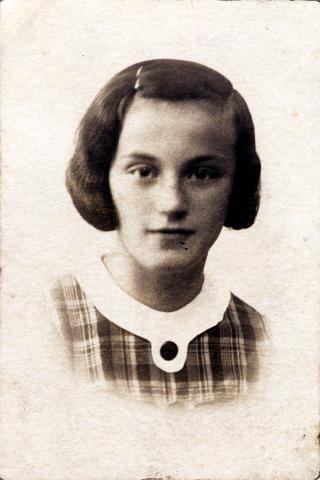
Erna Goldmann as a little girl
Erna Goldmann was born on December 22, 1917 in Frankfurt am Main as the youngest child of Theodor Guggenheim and his wife Rosa, née Rapp. She lived with her parents Theodor and older brothers Karl and Paul on the second floor of her parents' house at Eschenheimer Anlage 30, near Eschenheimer Tor. Her maternal grandfather, Michael Rapp, who owned the house, lived on the second floor; her grandmother was no longer alive when Erna was born. A doctor and his family lived downstairs on the first floor. Until the Great Depression of 1929, when Erna was twelve years old, the Guggenheim family did very well in Frankfurt. They led a lavish life in the seven rooms on the second floor, had a housekeeper and a cook. The housekeeper lived in the rear building of the Eschenheimer Anlage and looked after little Erna.
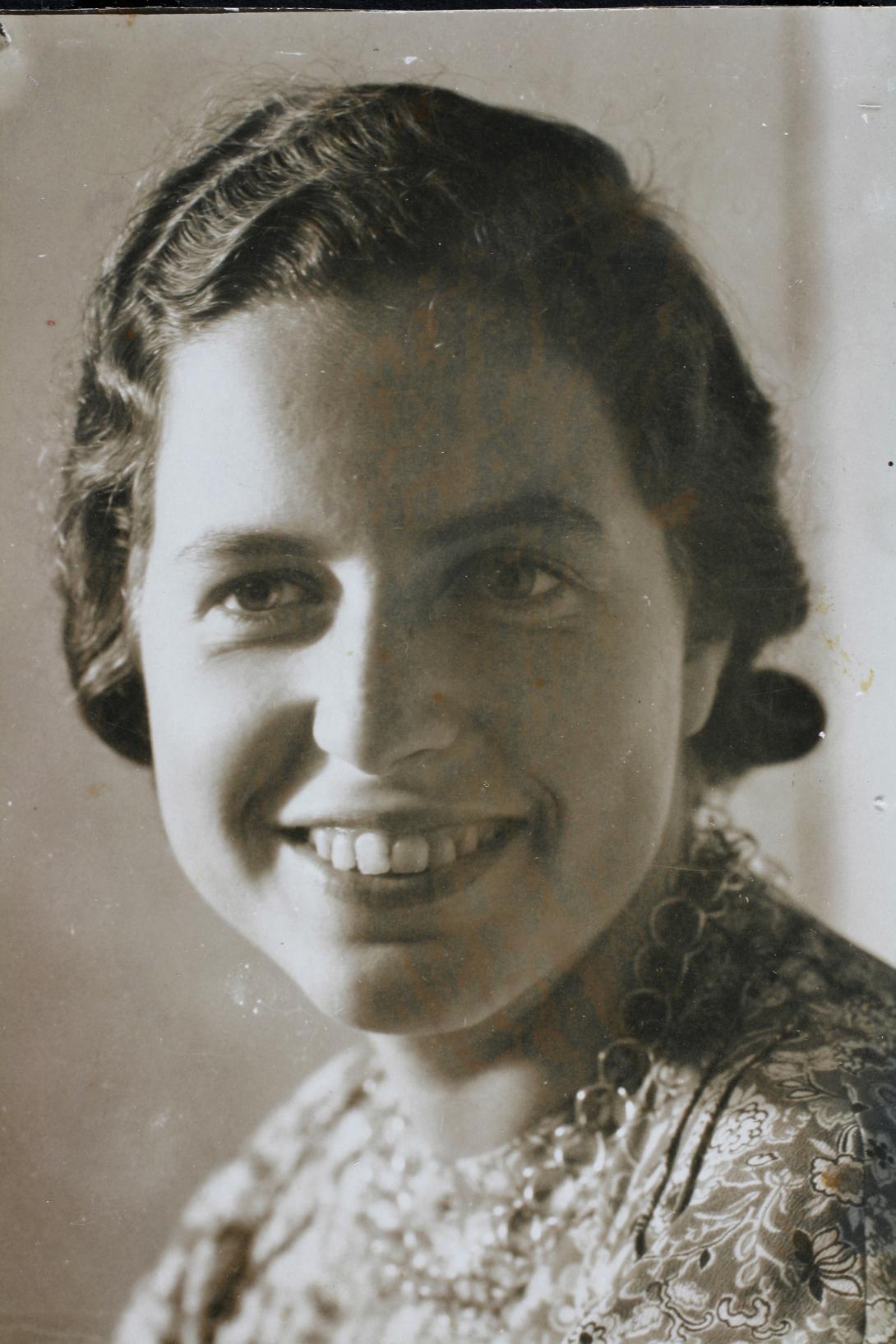
Erna Goldmann
Her grandfather had achieved some prosperity by importing coffee. Later, Erna's father took over his father-in-law's business and expanded it with a grain trade. After the economic crisis, the Guggenheim family had to rent out part of the large apartment on the second floor. Nevertheless, Erna remembers a carefree childhood. Erna's mother's family, the Rapps, came from Frankfurt am Main, while the Guggenheims, her father's family, originally came from Worms. Erna remembers that her family lived a traditional Jewish life, i.e. kept a kosher household and celebrated the Jewish holidays. Erna was given her middle name Chava (Eva) in memory of her grandmother Eva Rapp.
Erna's father and grandfather regularly went to synagogue on Shabbat, while Erna herself, her mother and her brothers only went on Jewish holidays. Erna attended the Samson-Raphael-Hirsch-School until the 10th grade, which was located near the zoo, right next to the Kaiser-Friedrichs-Gymnasium, today's Heinrich-von-Gagern-Gymnasium. The school building no longer exists today. The Samson Raphael Hirsch School was a Jewish religious school named after the famous Frankfurt rabbi Samson Raphael Hirsch (1808-1888). Of course, Jewish religion and Hebrew were taught at this school, but Erna was not very interested in these subjects. She found the Zionist youth movement “Blue and White” much more exciting and attended its meetings in the afternoons with her brothers Karl and Paul. The children and young people went hiking together in Frankfurt's city forest, went on bike rides, swam, sang, took part in vacation camps and talked about the “Jewish homeland” in Palestine.
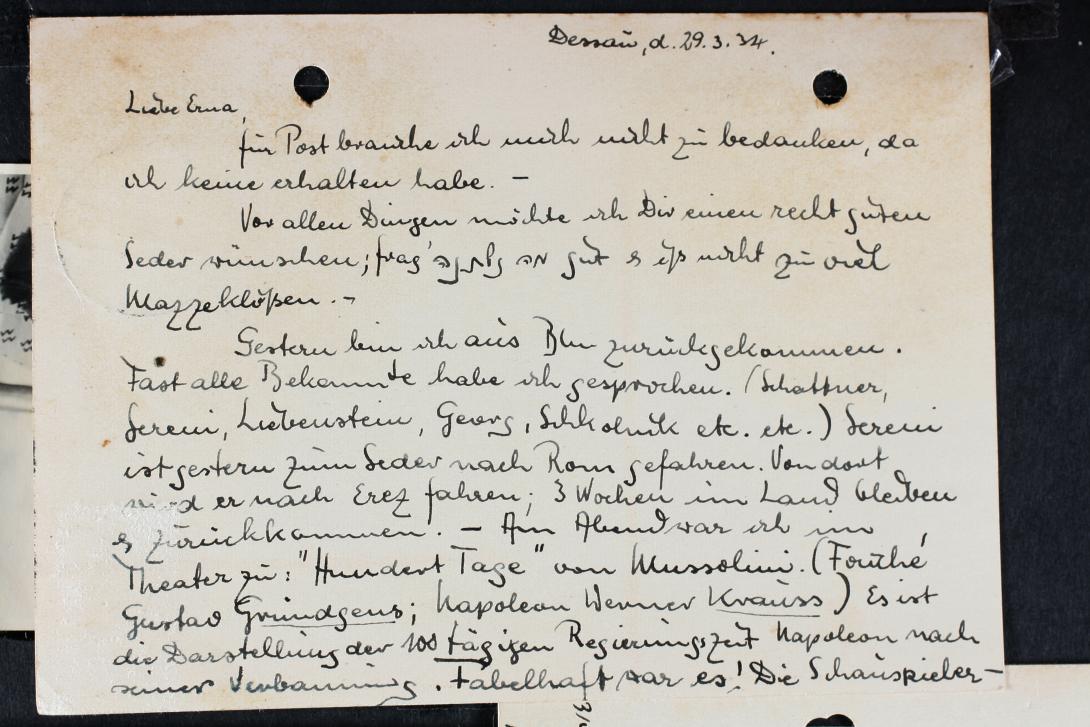
Postcard from Moshe Goldmann to Erna Guggenheim
In the Zionist youth movement, 16-year-old Erna met her future husband Moshe (Martin) Goldmann in 1933. He was 20 years old at the time and lived in Dessau (now Saxony-Anhalt). Moshe Goldmann’s mother’s family came from Vienna, while his father’s family originated from Poland. Unlike the “Western Jews” living in Germany or France, Moshe’s family belonged to the so-called Eastern European Jews (“Ostjuden”), who primarily lived in Poland, Russia, present-day Ukraine, and Romania. Due to persecution and marginalization of Jews in Eastern Europe, and poor economic conditions, many Eastern European Jews migrated to Western Europe at the end of the 19th century and between the two World Wars. However, Moshe was already born in Germany, as were his three sisters Jenny, Lotte, and Mali. He trained as a tanner in Frankfurt, as he was expected to one day take over his father's leather goods factory in Dessau. When visiting his parents, Moshe would send Erna postcards and letters. He was active in the youth movement "Blau-Weiß" and emigrated to Palestine as early as 1934, then a British Mandate territory. His parents and sisters were also able to emigrate before the outbreak of World War II. Erna’s brother Karl emigrated to Palestine shortly after completing his medical studies. Moshe’s last postcard from Dessau already clearly reflects the propaganda of Nazi Germany.
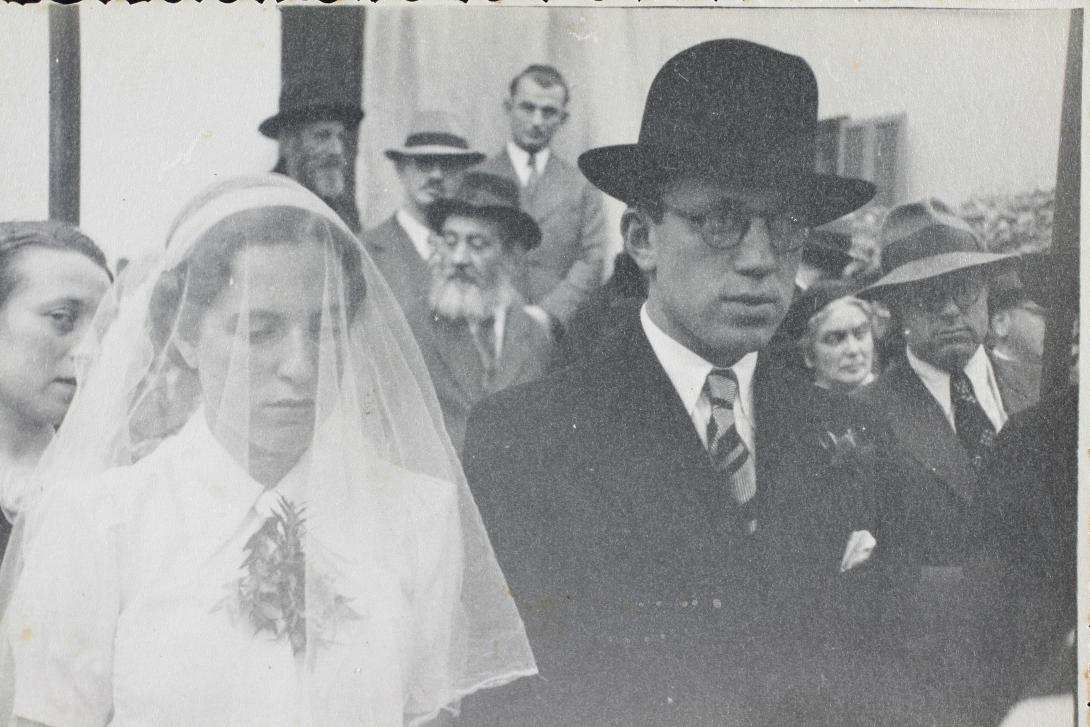
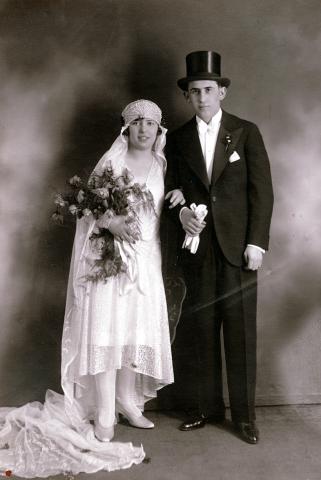
Erna and Moshe Goldmann's wedding
After completing the 10th grade, Erna initially worked at a precious metal workshop and then attended the Frankfurt School of Arts and Crafts (Städel School) on Mainzer Landstrasse 1. In 1935, however, she was informed that she could no longer attend the school because she was Jewish. Since the Nazis seized power in 1933, the situation for Jews in Germany had become increasingly dire. Erna recalls in the film the many Nazi parades and flags lining the streets of Frankfurt. In 1935, her father died of a heart attack. Her brother Karl urged the family to join him in Palestine. In the summer of 1937, Erna and her mother were able to emigrate. That December, Erna married her friend Moshe in Tel Aviv, who had already been living in Palestine for some time.
Her maternal grandfather, Michael Rapp, stayed in Frankfurt. After the Kristallnacht pogrom on November 9, 1938, he found refuge with non-Jewish acquaintances. He died in September 1939. Erna’s brother Paul, who lived and worked in Delft, the Netherlands, managed to escape the Nazis to Cuba. After the war, he lived in Amsterdam with his family.
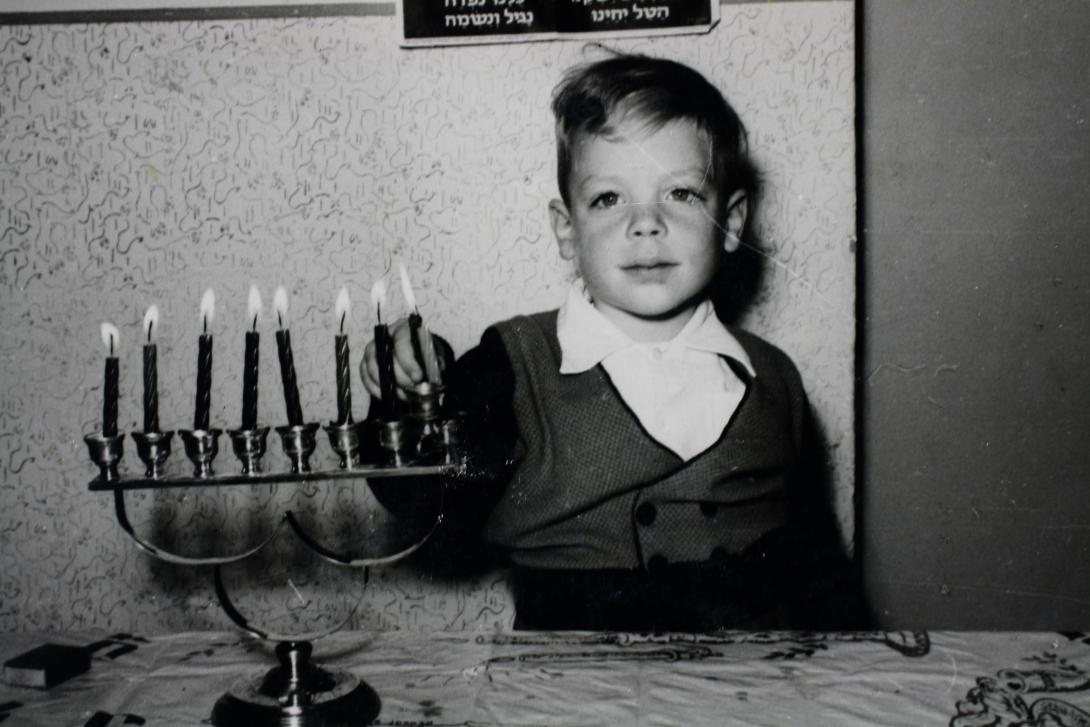
Rafael Goldmann at Chanukah
In Palestine, Erna’s mother worked as a housekeeper until she fell ill and died in Jerusalem in 1948. For Erna and Moshe Goldmann, however, a new life began. They founded a small transport business in Tel Aviv. Moshe served in the British Army during World War II, working as a chauffeur for officers. In 1940, their first son Daniel (called Dani) was born. While Dani was still young, Erna contributed to the family's income by making small pieces of jewelry and selling them to the Women’s International Zionist Organization (WIZO). In 1951, Erna and Moshe had a second son, Rafael (called Rafi).
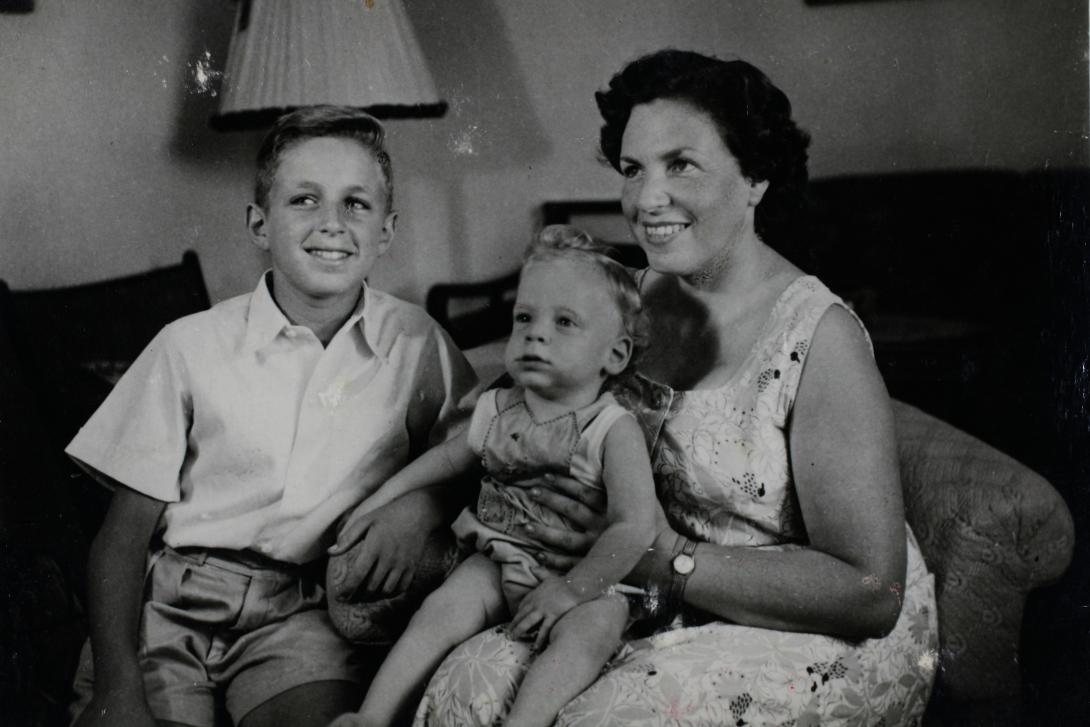
Erna, Daniel and Rafael Goldmann
In 1963, the family moved to Ramat Gan, a suburb of Tel Aviv. Erna stopped working and devoted herself to the household, garden, and family, as Moshe was now earning enough through the business he had built. In 1964, their son Dani married Pnina, whose family had lived in Palestine for generations. They had two children, Moshe and Joni, who now live in Israel with their families. Dani died in a car accident in 1990. In 1967, Moshe Goldmann died unexpectedly of heart failure. Later, their younger son Rafi took over the family business, which is still in family hands today. Rafi’s wife Hannah comes from a Russian immigrant family. Rafi and Hannah have two children, Odet and Adam, who also live in Israel. In 2003, Erna Goldmann moved into a retirement home in Ramat Gan. Her son Rafi, who lives nearby, visited her often. Erna Goldmann died in April 2012 at the age of 94 in Tel Aviv.