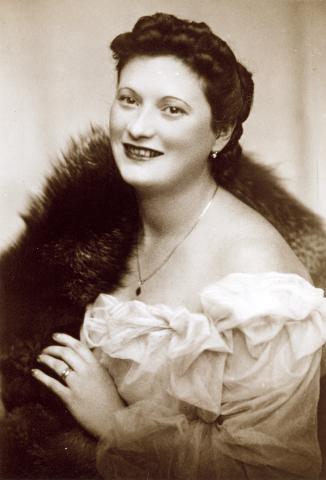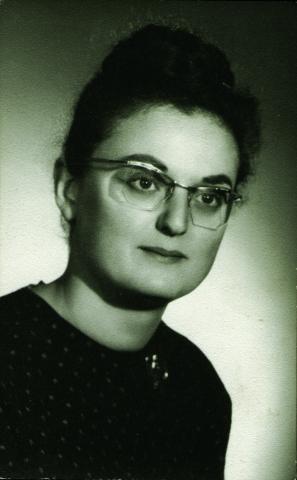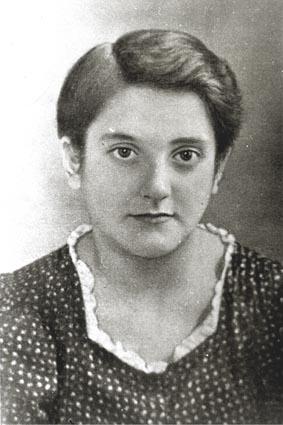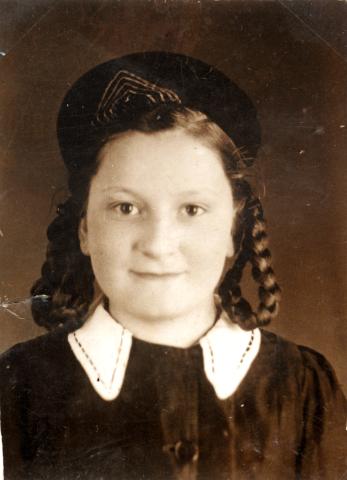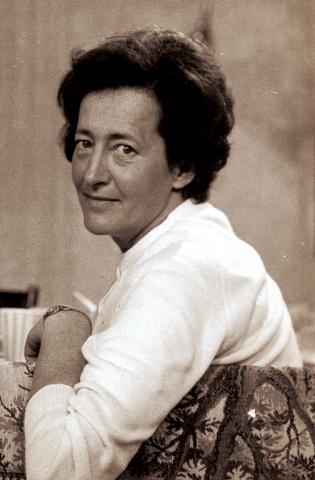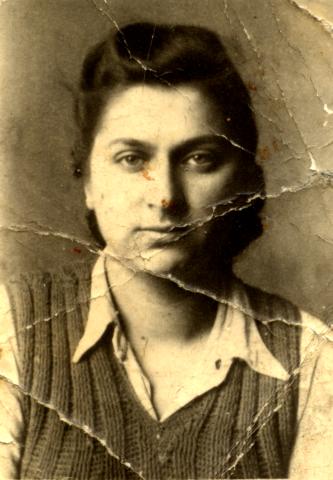
Fania Brantsovskaya
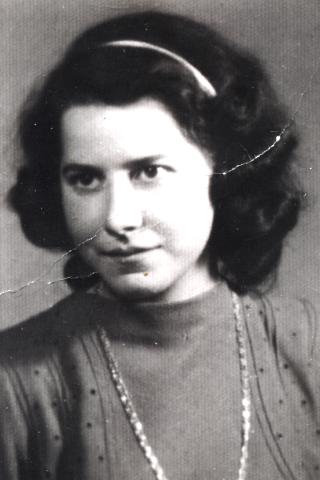
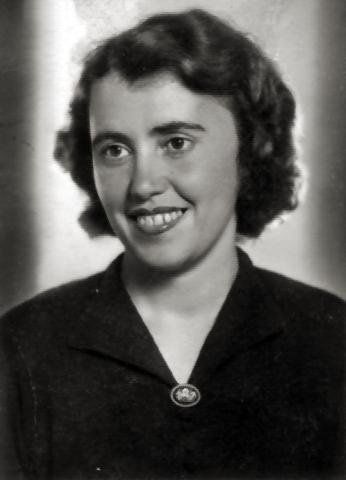
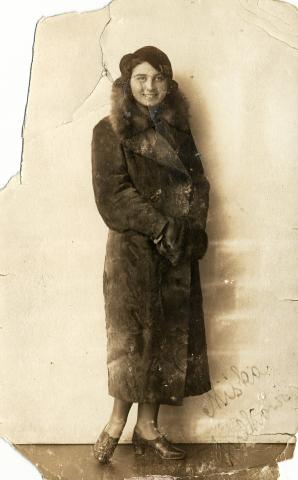
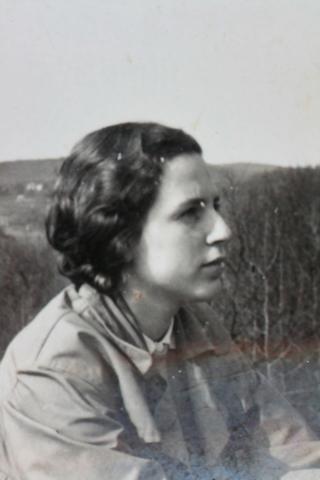
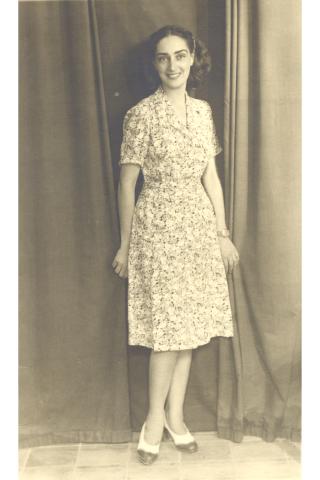
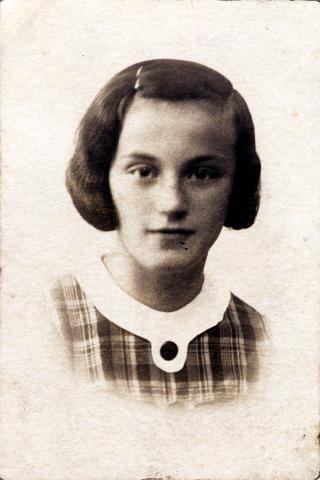
Fania Joheles (maiden name) was born in 1922. Fania had a sister Riva who was 5 years younger.
Fania Brantsovskaya (1922 – 2024)
“I am now happy that Lithuania has become independent. This promotes the development of the Lithuanian and Jewish nations”

Fania with a photo of her family and relatives
Childhood and family
Fania Joheles (maiden name) was born in 1922, in Kaunas. Fania about her name: “I was named Feige, but since my early childhood everybody called me Fania, which is a Russian name”.

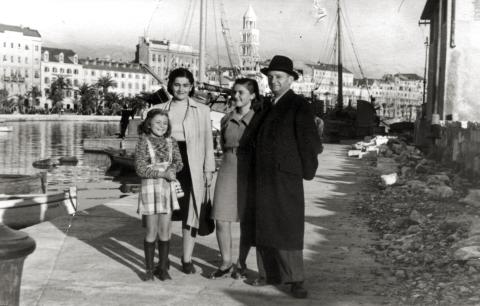
Fania's parents and Fania (older) and sister Riva (younger)
When Fania was a small child, Fania’s parents decided to settle in Vilnius. Fania had a sister Riva who was younger 5 years. Fania’s parents were not rich: father Beniamin was working as an instructor of an electric mechanic laboratory of the polytechnic school of the organization of the workers' union. Fania’s father's salary wasn't enough to cover all family expenses and when Fania’s parents managed to get a suitable lodging father opened his own electric technical shop. Mother Richelle was housewife. The family
rented flat in Pylimas street which was very close to Vilnius old city and one of Vilnius synagogue. At home family spoke in Yiddish, but Fania knew Polish language very well. (Vilnius belonged to Poland from 1919 till 1939).
The family wasn’t religious. But Fania’s grandparents followed Jewish traditions. Fania remembered: “In my childhood we visited my grandfather and grandmother on Saturday. We hired a wagon and I was looking forward to it with pleasure each time. We arrived on Saturday afternoon. My grandfather asked my grandmother to turn on the lights and she lit a lamp grumbling. The Sabbath was still on and it wasn't allowed to turn on the lights till the end of Saturday.”
Fania remembered how she celebrated Jewish holidays at school. Fania studied in Sophia Gurwich gymnasium and Fania’s father paid 50 percent of tuition fees as he was a member of the teachers' association. However, it happened sometimes that Fania wasn't allowed to come into the classroom when her father didn't pay these fees on time.
Fania belonged to the Zionist Jewish scout organization 'Bin'. She spent much time together going on excursions and hiking tours in summer. She with her friends often went to the theater.
The Eve of the WWII and the Outbreak of War

Fania in the middle of the boat
1939 Autumn Fania started to study in Grodno (Belarus). In spring of 1941 she came to Vilnius for vacation and planned to study in Vilnius University (that time Lithuania was occupied by Soviets). Fania told: “On 1st June 1941 I went to enter Vilnius University. When I came to submit my documents, I was told to come back in July. I met with my friends whom I hadn't seen in two years. At this time the Soviet authorities began with the deportation of Lithuanian Zionists and wealthier people to the Gulag 35 camps. Some of my friends were gone. On 21st June I met a friend, whose father was an outstanding doctor. We were standing near my house discussing whether his parents could possibly be subject to deportation. On the following morning, 22nd June, the war began.” But 22th of June Vilnius was bombed by the Nazi planes. Fania and her father planned to escape to Soviet Union but unsuccessfully.
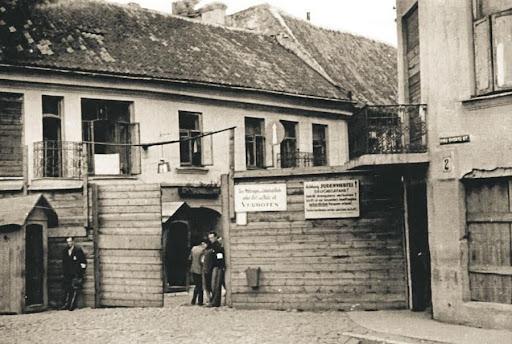
fania.jpg
The period of Vilna Ghetto
Two ghettos created in Vilnius on 6th September. Fania’s family was sent to Ghetto. Fania told: “ There were two ghettos created on 6th September: the one where we were was big with a central point on Rudninku Street. The smaller one was on Stikle and Jidu Streets. Many Jews from other streets were taken to Ponary. All Jews from Antokolis, my grandfather Velvl and grandmother Rohe-Gisia, and all Jews from Lidskaya Street were taken to Ponary. We were almost lucky to be living near the ghetto and getting there before it was overcrowded. All sick and older people were taken to the smaller ghetto. People who specialized in some crafts were kept in the bigger ghetto. In late October 1941 the smaller ghetto was eliminated.” Fania worked very hard different works because the biggest problem was to get meal for family. Father was a good specialist and he also tried to get some meal.
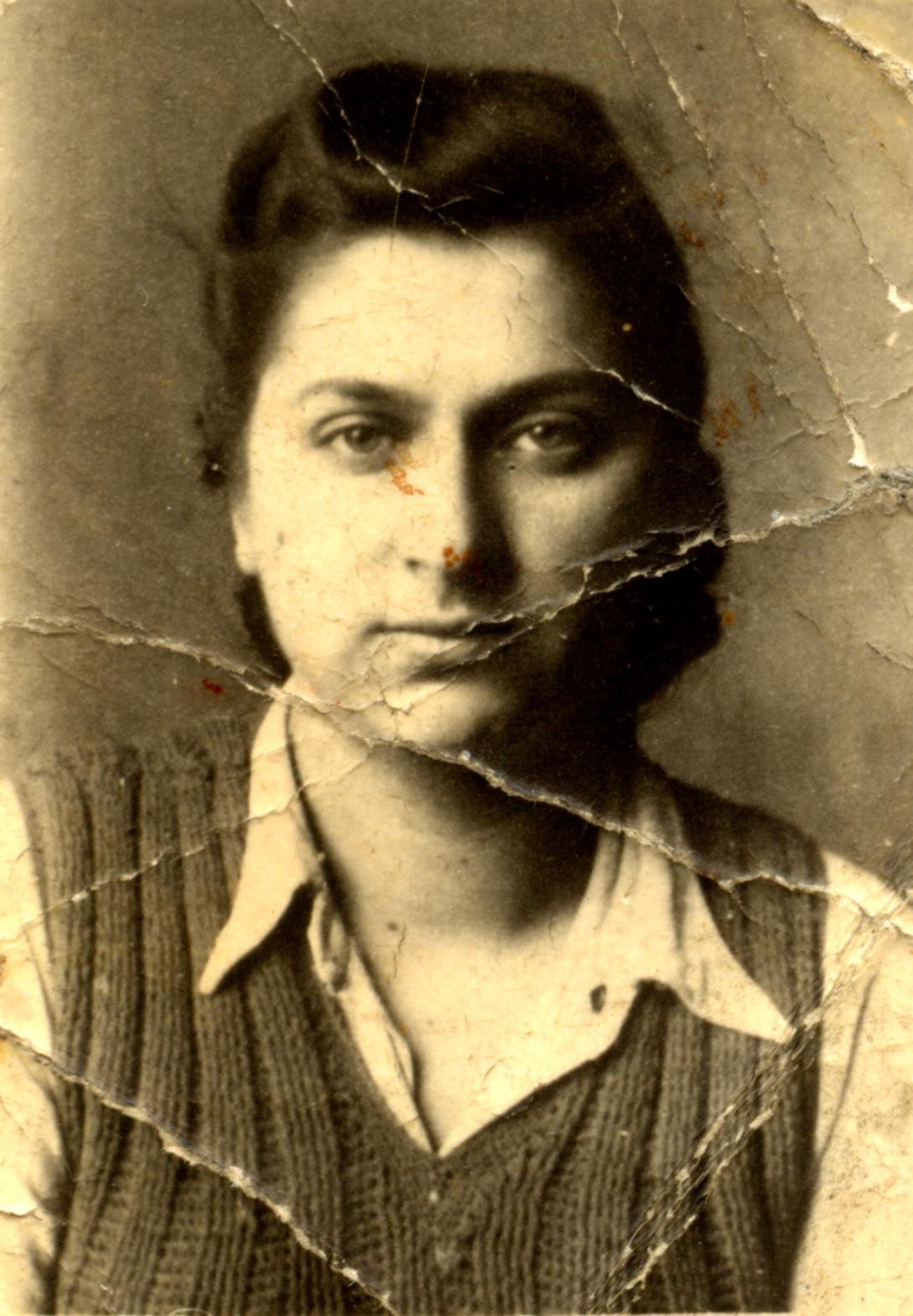
Fania
Fania participated in the underground organization of the ghetto. On 23rd of September, in the morning meeting of the underground organization, it was proposal for Fania and Doba (the other young girl) to leave the ghetto. Fania told: “I came home. I told my parents I would probably go to the partisans. [My mom] sewed the star on me the way I could tear it off very easily. Mom also [prepared], I remember a portfolio, which somehow remained. A kind of a handbag. I had a friend who as soon as we got into the ghetto gave me a bottle of perfume or eau de cologne on my birthday because his family owned a perfume shop before the war. I also took a towel, a [blue] blouse I knitted myself and my mom had some [cooked] peas. And after about half an hour, Doba [Doveltov] came and said there was a chance to get out of the ghetto […]. And I said goodbye to my parents, sister … And we went out …”
Fania left the Ghetto together with Doba the same day as Vilnius Ghetto was liquidated. Fania and Doba reached Rudninki Forest and met with Soviet partizans, who gave the information that Ghetto was liquidated. Fania was telling about her experience in the Soviet Partizan Unit: “There were few women in the squad. Girls acted as liaisons. Especially those whose appearance was not typically Jewish – they were sent to a city to bring those who remained there to the partisans. It was very risky. Some women were doing intelligence tasks, communicating with locals. Some had different tasks, and others worked in the kitchen. While in the forest, we felt like we were men … But the commander of the squad once said, ‘You’re not men!’ Every time I had to prove my truth …”
Fania’s survival and the destiny of the family
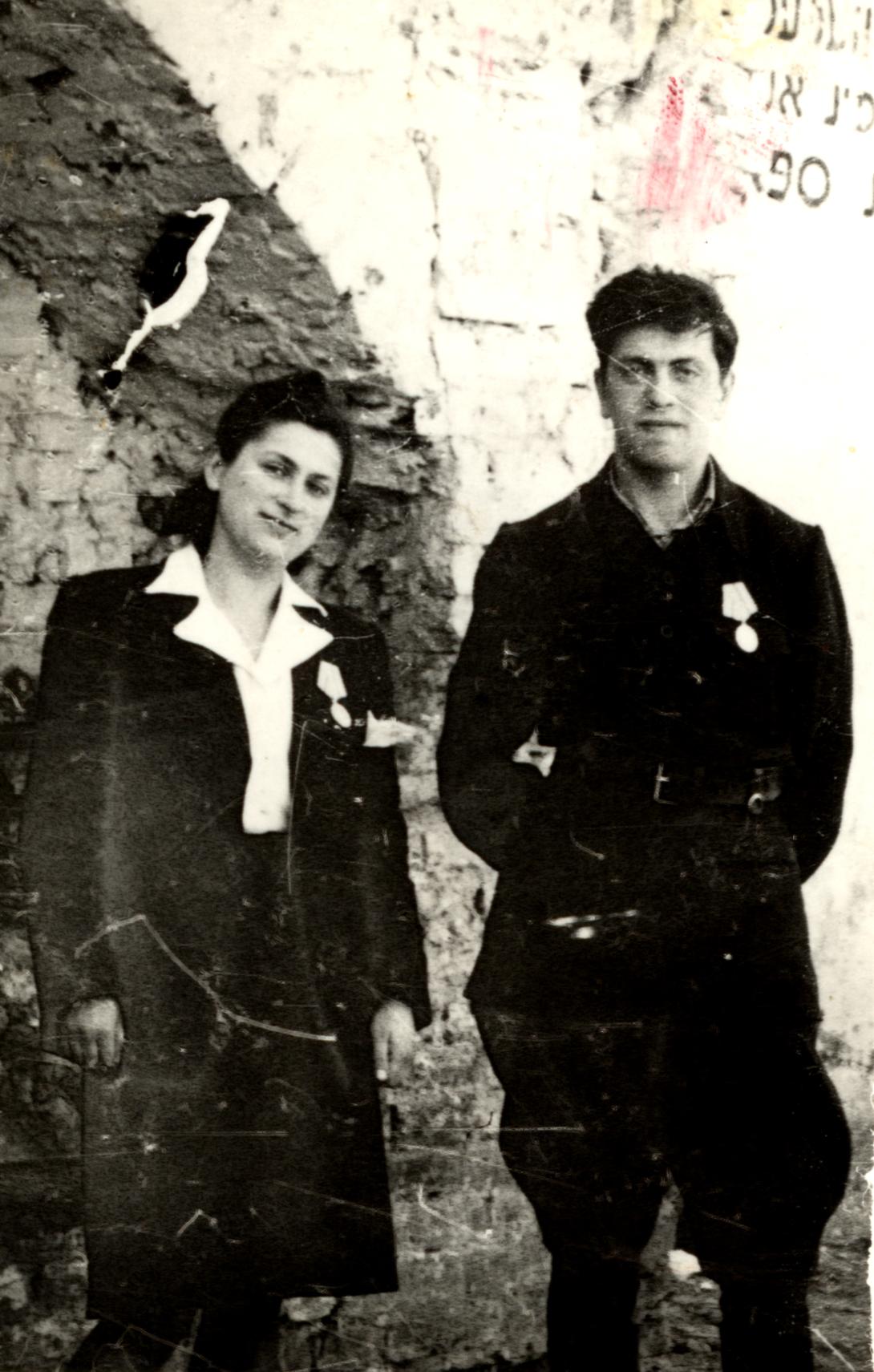
Fania and Mikhail
Fania’s mother and sister Riva were sent to Kaizerwald Concentration camp and later placed on a ship that was sunk at sea. Father was sent to Estonia, to Klooga Concentration Camp and he was killed a few days after liberation. All relatives who lived in Lithuania before WWII – they were killed during the Holocaust.
Fania survived in the Jewish partisan unit “For Victory”, were she met Mikhail Brantsovkiy, who was Jew from Vilnius, he studied in Hebrew Gymnasium, who also left Vilnius Ghetto and lost his parents when Vilnius Ghetto was liquidated. Fania and Mikhail fell in love. After the war they got married. They didn't observe Jewish traditions, but they spoke Yiddish to one another. They had two daughters. Fania’s husband passed away in 1985.
Fania told: “Many who survived in the ghetto and various [concentration] camps told nothing to their loved ones. Stayed silent for a long time … couldn’t talk. And their children didn’t know what they were going through. And only in recent years many started coming to Paneriai. And they started talking. Myself to my family – also … My children were born … I started telling them from the first day.”
As Fania told: “My work and children helped me to survive. I retired in 1990. My daughters have had a good life. They finished school with gold medals. Both graduated from the Faculty of Cybernetics of Vilnius University, nine years one after another.”
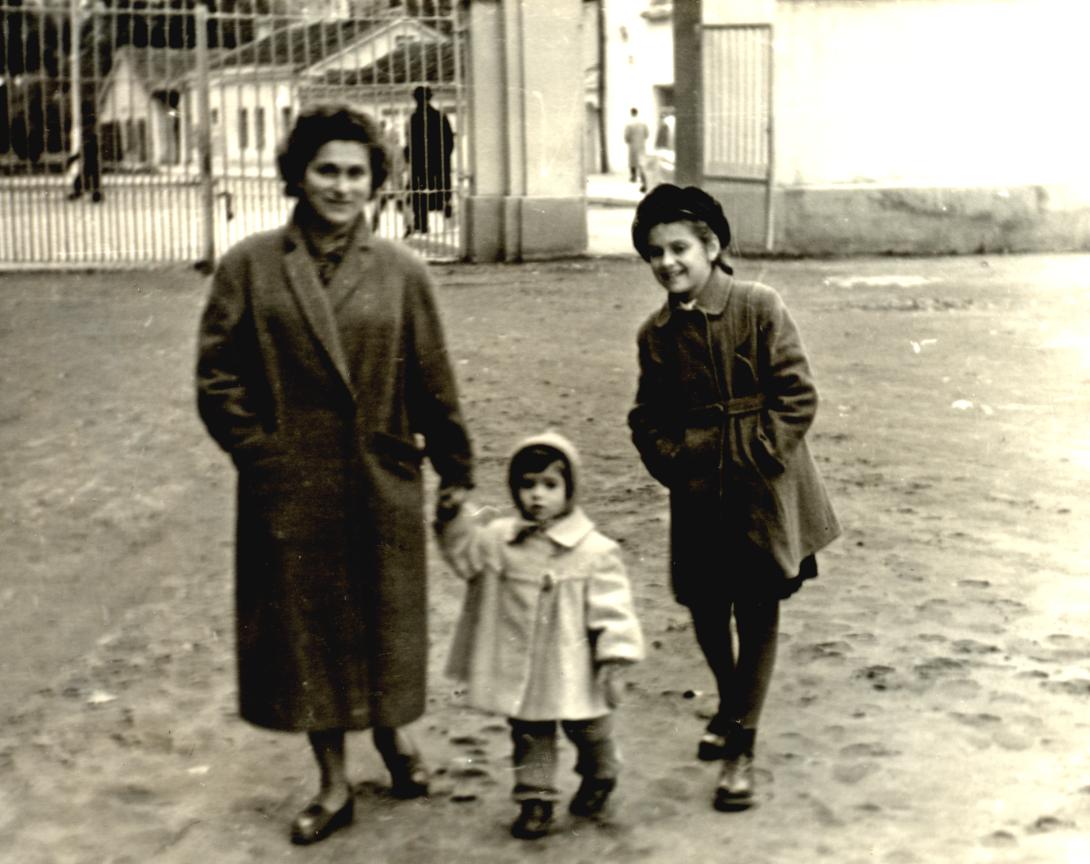
Fania with her daughters
Fania knew that she has relatives in Israel because her Mother’s parents went to Palestine from Lithuania before WWII. But it was Soviet occupation and Fania couldn’t contact with Israel and to try to find. In 1989 Fania’s maternal relatives found her and she started to visit Israel quite often. When Fania became as pensioner she started to work as volunteer in Vilnius University, in Yiddish Institute and also volunteer for the section of former ghetto inmates. She many times attended in the meetings with students, teachers.
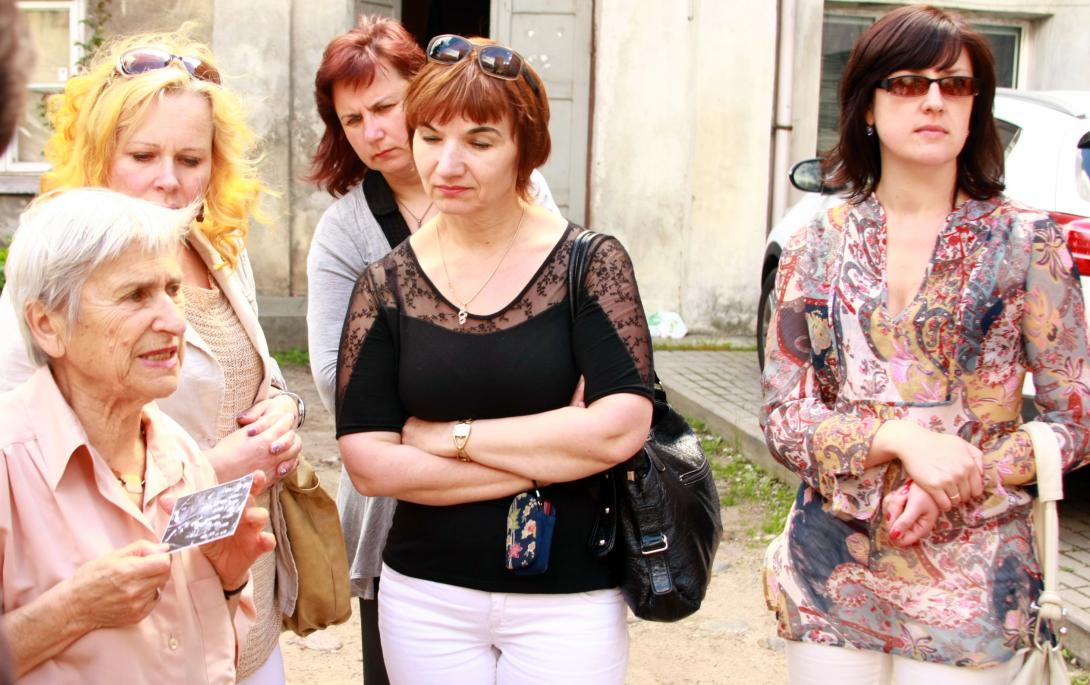
Meeting with teachers
Fania’s mission in her life
Fania was as volunteering guide to tell about life in Ghetto during teachers’ seminars and conferences.
As Fania repeated many times that her mission to tell her story and to tell what happened to the Jews of Lithuania. But also she repeated many times, that she was a very happy woman with a very loving husband and a great family.
As Fania told: “I don't regret that my husband and I have lived our life in Lithuania. Though, in the course of time, we had more and more understanding of the hypocrisy of the Soviet power, we were its true servants. However, I'm happy that Lithuania has become independent. This promotes the development of the Lithuanian and Jewish nations.”