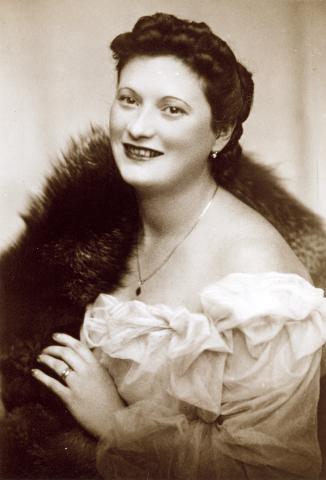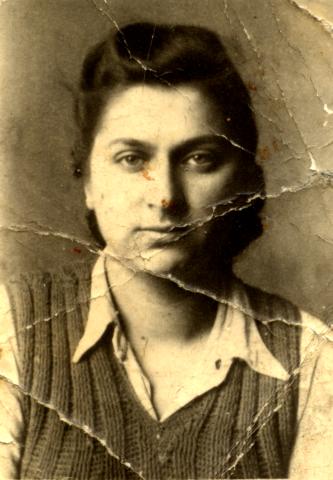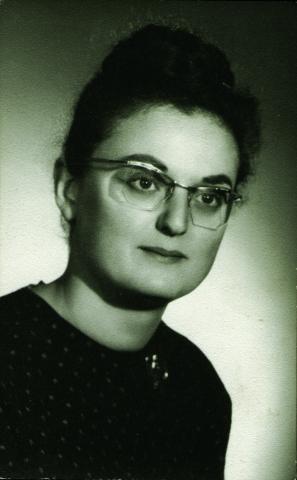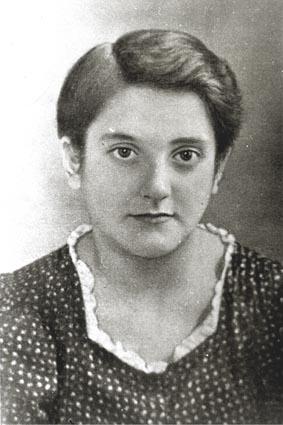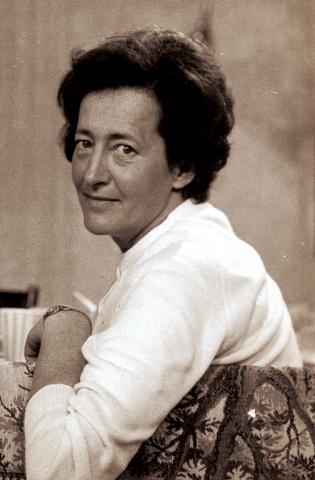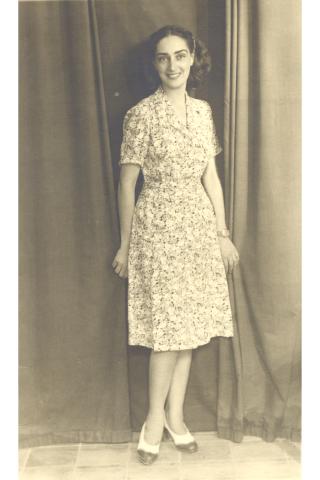
Renée Molho
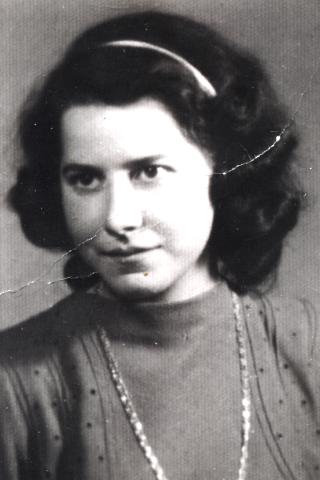
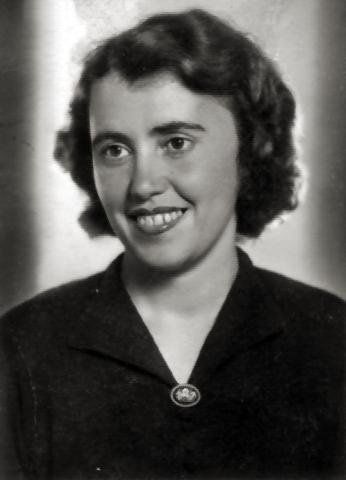
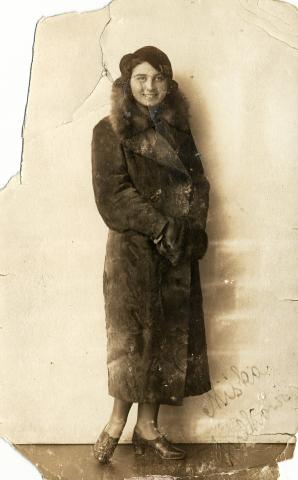
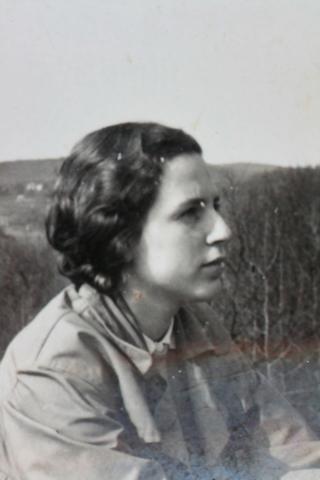
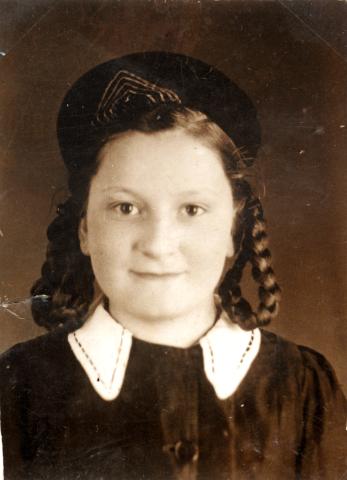
Renee Molho was born in 1918 in Thessaloniki, Greece, to a prominent Sephardic Jewish family. Her childhood in Thessaloniki was filled with the warmth of her family.
Make sure to view the Centropa film about Renée Molho
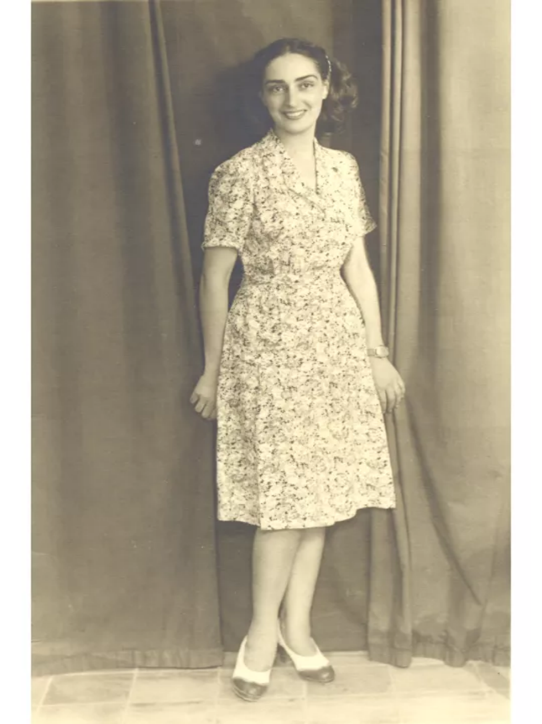
Renée Molho
Renée Molho (née Saltiel Abravanel), born in 1918 in Thessaloniki, Greece, was a member of one of the most significant Sephardic communities in Europe. Her life story reflects the trajectory of Greek Jewry in the twentieth century: from a flourishing and deeply rooted cultural presence to the devastation of the Holocaust and the subsequent struggle for survival, reconstruction, and memory. Through her experiences, we gain insight into both the fragility and resilience of a community that was almost entirely destroyed yet left enduring traces through the lives of its survivors.
Early life in Thessaloniki Before the War
Renée was born into a Sephardic family in Thessaloniki at a time when the city’s Jewish population was still a central element of its identity. Often referred to as the “Jerusalem of the Balkans,” Thessaloniki had, for centuries, been home to a large and vibrant Jewish population descended primarily from Sephardic Jews who had settled there after their expulsion from Spain in 1492.
The Jewish community played a crucial role in the city’s economic, social, and cultural life. Ladino, the Judeo-Spanish language, was widely spoken, and Jewish traditions shaped everyday life. Renée grew up in this environment, where Jewish identity was not marginal but deeply integrated into the urban fabric.
Her early years were marked by relative stability and a sense of belonging. Like many Jewish families of the time, hers combined respect for tradition with openness to modern influences and was filled with the warmth of her family.
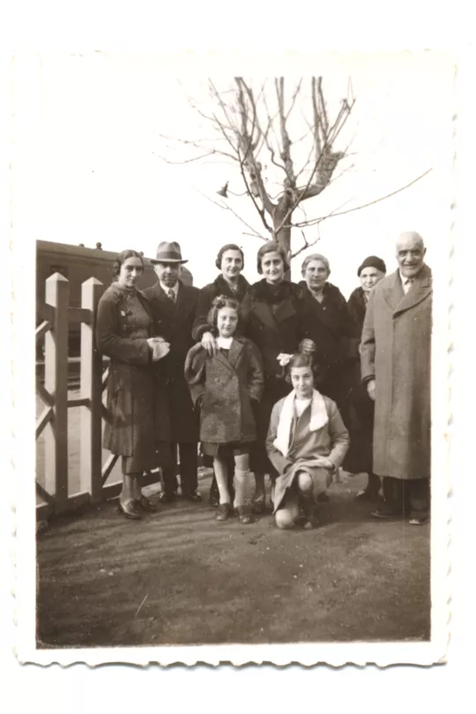
Renee with her relatives
Her father, Joseph Samuel Saltiel, was a lumber merchant and her mother, Stella Abravanel, was known for her elegance. She had two sisters, Matilde and Edda.
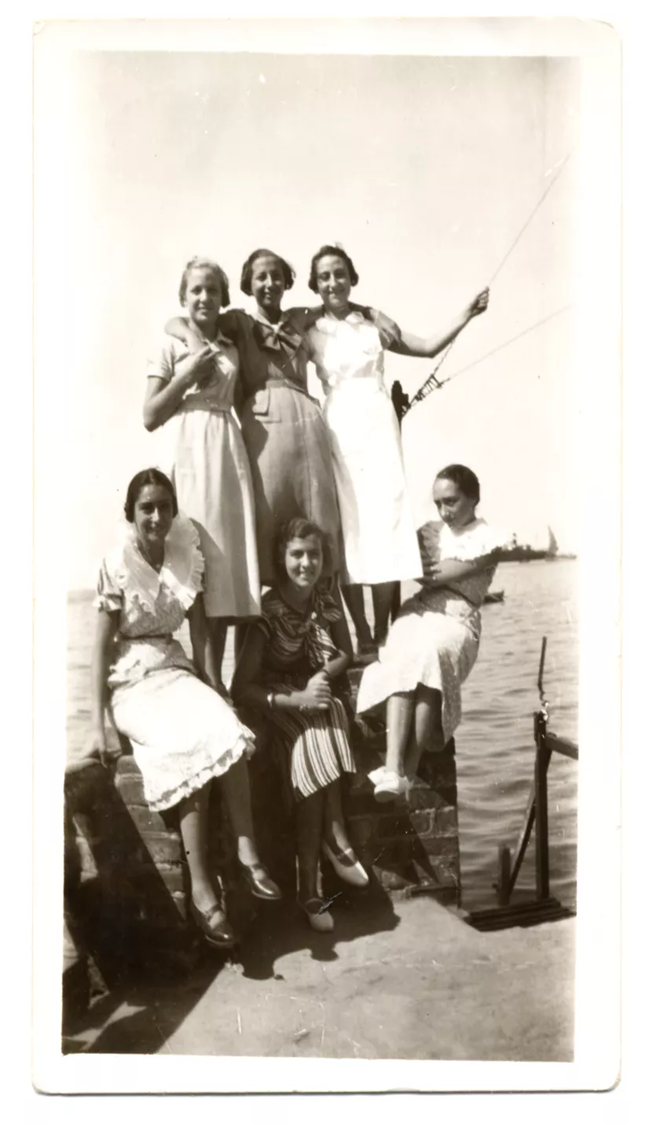
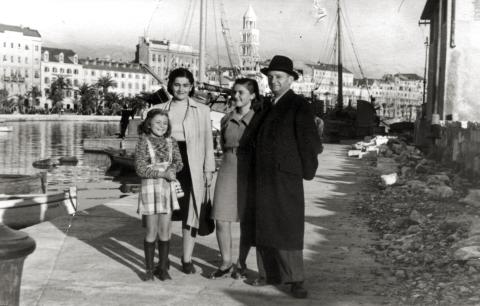
Renée with her sister Matilde and friends
Education, family ties, and community life formed the foundation of her upbringing. She was an excellent student. She graduated from Alliance Israélite Universelle and American College (Anatolia).
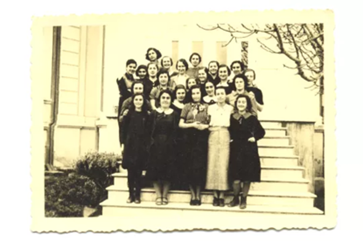
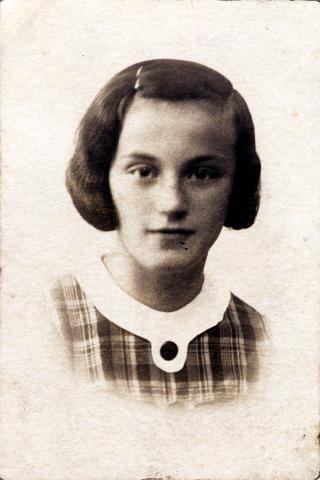
Renée Molho with her schoolmates
Renée's life was linked to Solon Molho's life from early on. Their families lived a few streets away. Solon was born in November 1918 in a well-off family. He had two sisters. The two families, Molhos and Saltiels, knew each other. On a walk on the beach in Thessaloniki, his mother told him: "Esta chica es para ti: This girl is for you."
Molho's bookstore was well-known in the city. Isaac Molho founded the first bookstore in 1888.
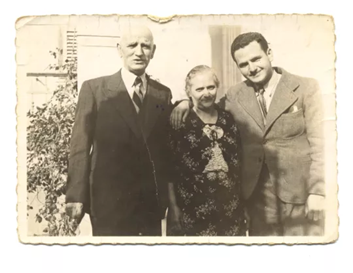
Solon Molho and his parents, Mair and Sterina Molho ~1940
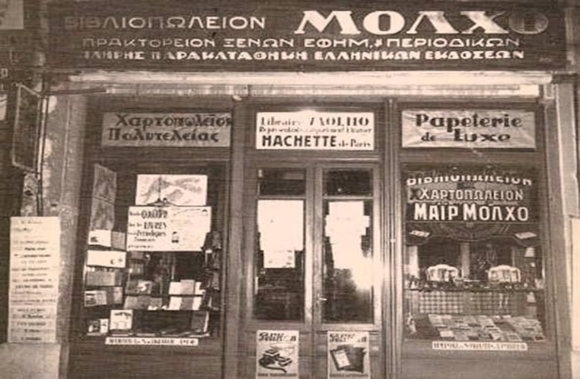
The famous Molho's bookstore
The Disruption of War
The outbreak of World War II and the subsequent German occupation of Greece in 1941 brought an abrupt and catastrophic end to this world. On April 9, 1941, Germans occupied Thessaloniki. By March 1943, the Nazi authorities had begun the mass deportation of Jews from Thessaloniki to extermination camps, primarily Auschwitz-Birkenau. Within a few months, the vast majority of the city’s Jewish population, over 90 percent, was deported and murdered.
Renée’s life, like that of many others, was fundamentally altered by these events. Faced with the imminent threat of deportation, she became part of a group of individuals who sought to escape. Her survival was neither guaranteed nor straightforward; it depended on a combination of personal decisions, external assistance, and circumstances beyond her control.
Escape and the Journey to Safety
Renée’s escape from occupied Greece was a perilous and uncertain process. She joined other Jewish refugees attempting to flee via clandestine routes, often organized by resistance networks or individuals willing to risk their lives to help others.
Renée and her sisters secretly left and sought refuge in Athens, where they met Mrs. Lembesis, who hid and took care of them. However, someone betrayed them and Renée’s sisters were arrested and taken to the Haidari camp in Attica.
Germans left Renée to take care of her father, who was dying of cancer, saying they would come back to arrest her. After his death Mrs. Lembesis and the Spanish Ambassador Sebastián de Romero Radigales helped her to escape.
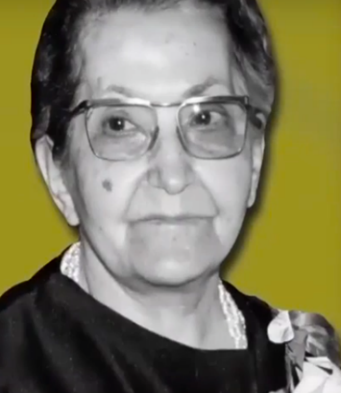
Mrs. Lembesis received the title of "Righteous Among Nations"
One of the most dangerous aspects of her journey was the sea crossing to Turkey and from there to the Middle East. Refugees were transported in small, overcrowded boats, often under very harsh conditions. Renée described being confined in the hold of such a vessel, where the lack of space, fresh air, and sanitation made the journey almost unbearable. Seasickness and exhaustion compounded the suffering of those on board.
Eventually, the boat reached the Turkish coast in Tsesme, where the refugees were received and processed. From there, Renée and others were transferred to a refugee camp. Conditions in the camp were basic, and the refugees underwent sanitary procedures before being allowed to continue their journey.
Like many Jewish refugees of the time, Renée’s ultimate destination was Palestine, then under British mandate.
Life in Palestine
Renée’s arrival in Palestine marked a new phase in her life. There, she reunited with friends and acquaintances from Thessaloniki who had also managed to escape. Life in Palestine was not without challenges. Refugees often faced economic hardship, uncertainty about the future, and the psychological impact of displacement. However, it also offered a degree of safety and the possibility of rebuilding.
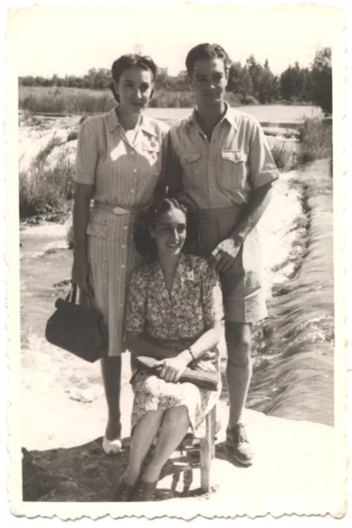
Renée Molho with friends in Palestine
Return to Greece and Confronting Loss
After the end of the war, Renée returned to Greece, a decision that reflected the desire to reconnect with her past. However, the reality she encountered in Thessaloniki was profoundly different from the world she had known.
The Jewish community had been almost entirely destroyed. Synagogues, schools, businesses, and homes had been lost or appropriated. Survivors returned to a city that was both familiar and alien, marked by absence and silence.
For Renée, as for many survivors, this return involved confronting immense loss. Family members, friends, and neighbors were gone. The social and cultural networks that had defined her identity had largely disappeared. Rebuilding life in such a context required extraordinary resilience.
Marriage and Postwar Reconstruction
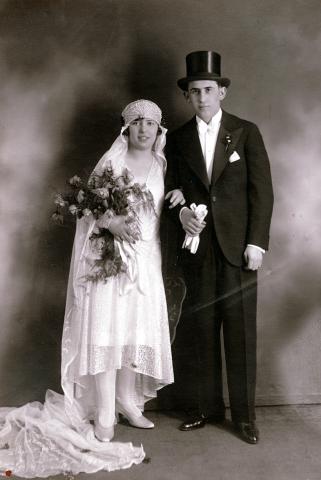
After liberation from the Germans, Renée returned to Athens, where she found her sisters who had survived. Solon returned to Thessaloniki and regained the family’s bookstore. They were married on March 17, 1946. They raised three children: Mair, Joseph and Nina Molho.
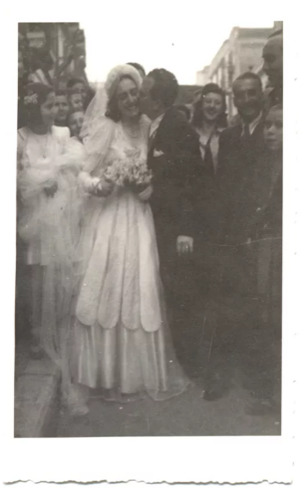
Renée Molho's wedding day
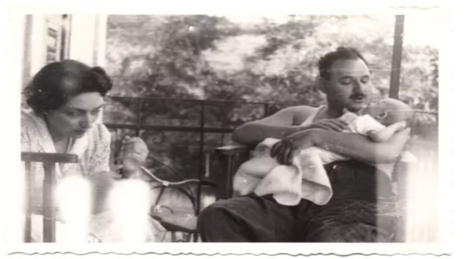
Renée and Solon Molho with their children
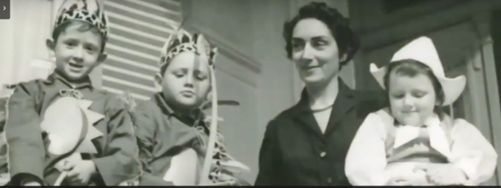
Renée Molho with her children
Cultural Contribution and Community Life
The couple reopened the bookstore in central Thessaloniki, which would become a large part of their lives. The bookstore was not merely a business but also a cultural space. In a city that had lost much of its Jewish intellectual life, it contributed to the preservation and renewal of cultural activity. The bookstore operated by Renée and her husband played an important role in the postwar cultural landscape of Thessaloniki. It served as a meeting place for intellectual exchange and a symbol of continuity in a city marked by rupture. Great writers passed through their bookstore, such as Umberto Eco and Harold Pinter, who won the Nobel Prize. In 1988, the French consul appointed them "Knights of Arts and Letters of the French Republic".
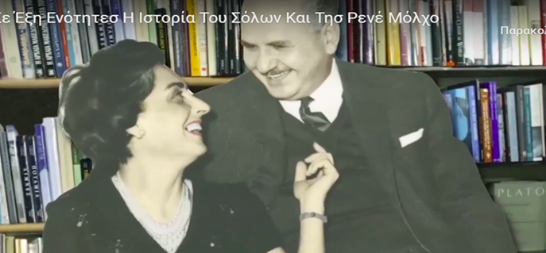
Renée and Solon in their bookstore
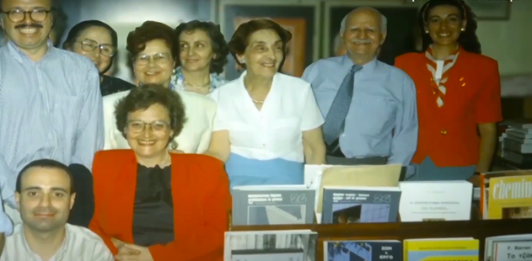
With partners at the bookstore
This effort was part of a broader process of reconstruction undertaken by the small number of Jewish survivors who returned to Thessaloniki. Community life, though diminished, remained important. Survivors sought to rebuild communal institutions, maintain religious practices, and preserve cultural traditions. Solon Molho died in 1997. The Molho bookstore closed permanently in 2004.
Memory and Testimony
In later years, Renée Molho became part of oral history projects, sharing her experiences with researchers and educators. Her testimony provides valuable insight into the experiences of Greek Jews during the Holocaust, particularly those who escaped deportation.
Her narrative highlights the complexity of survival. It was not a single event but a process involving multiple stages: decision-making, escape, displacement, and eventual reconstruction. Each stage presented its own challenges and required different forms of resilience.
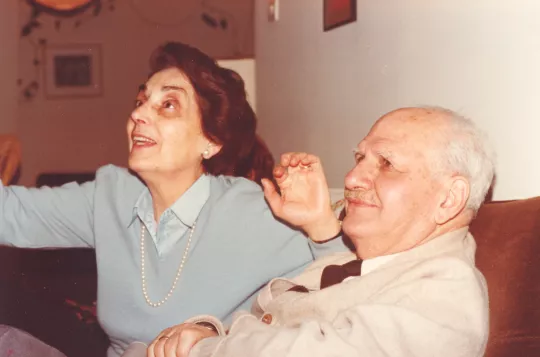
Renée and Solon Molho
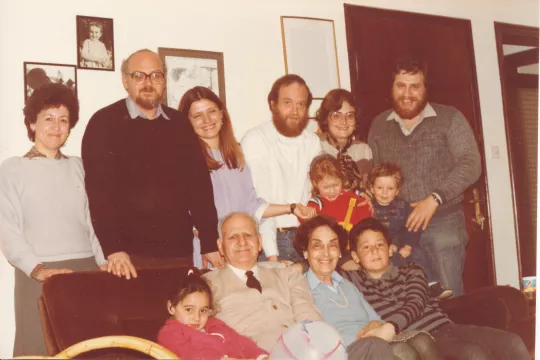
The Molho family
Conclusion
Her story is not only one of loss but also of renewal. Through her personal efforts and her contributions to community life, she helped preserve elements of a culture that might otherwise have disappeared. At the same time, her testimony ensures that the history of Thessaloniki’s Jewish community remains part of collective memory. Ultimately, Renée Molho’s life reminds us of the human capacity to endure and to rebuild, even in the face of profound destruction. Her narrative stands as both a historical record and a moral reflection on the importance of memory, solidarity, and resilience.