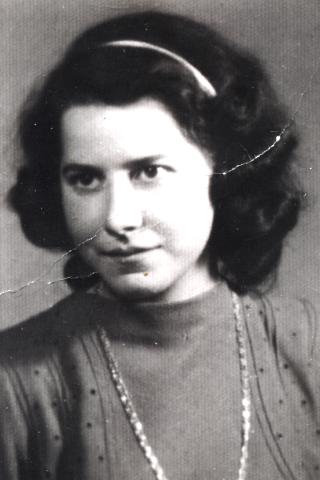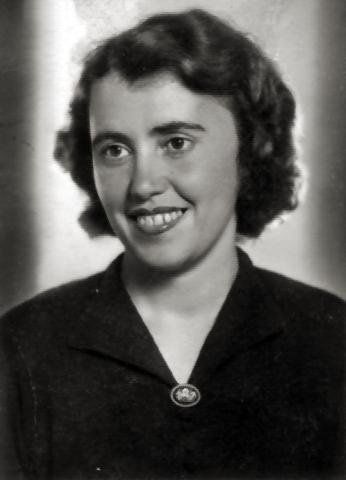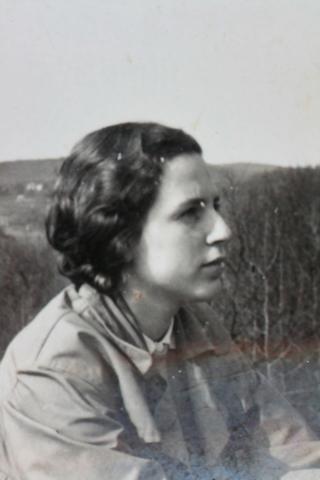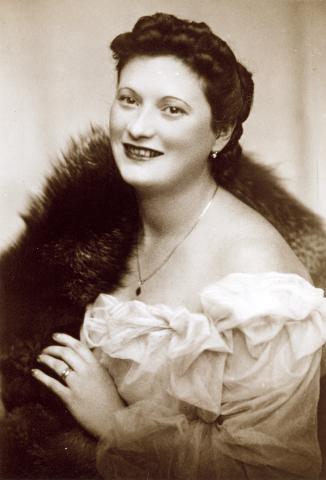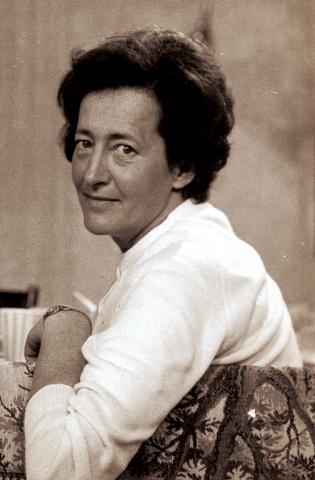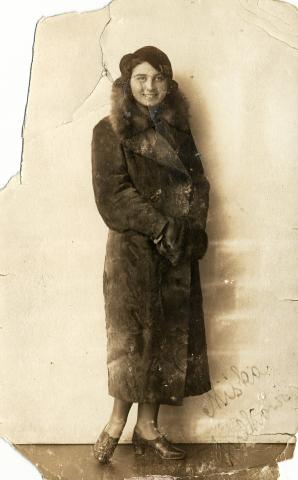
Emilia Leibel
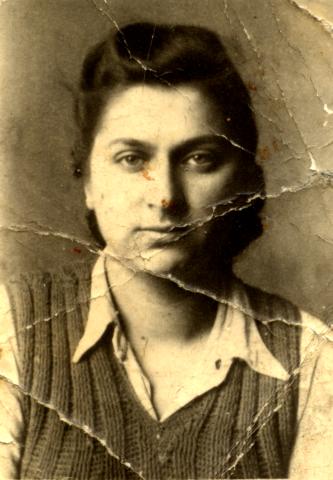
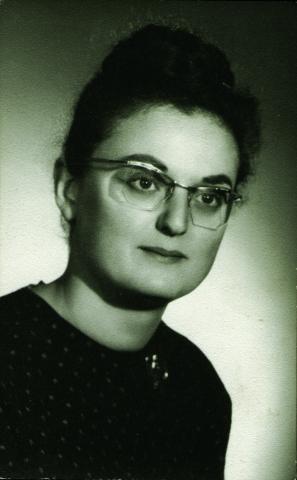
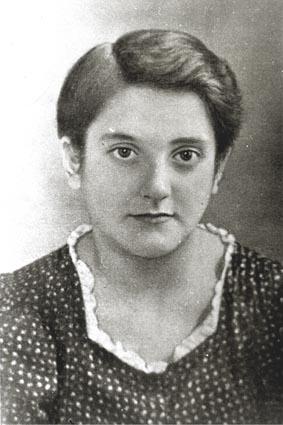
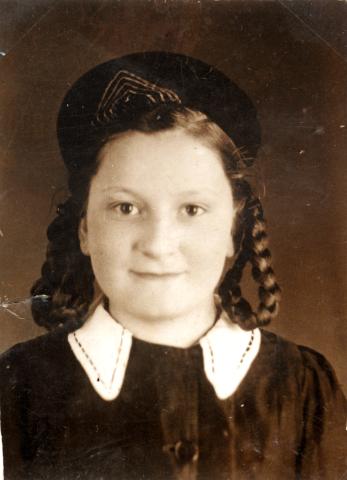
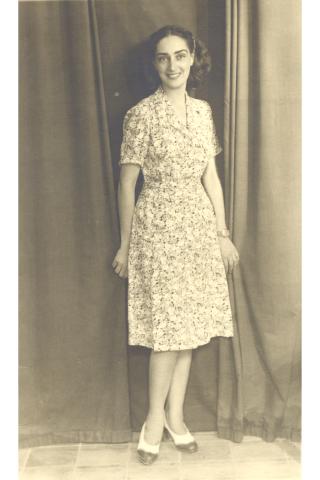
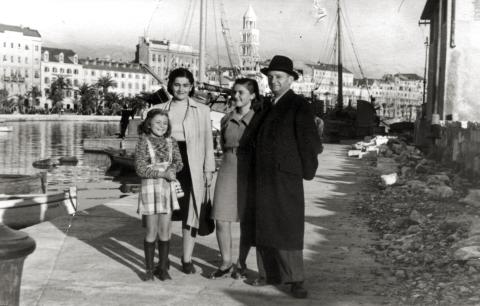
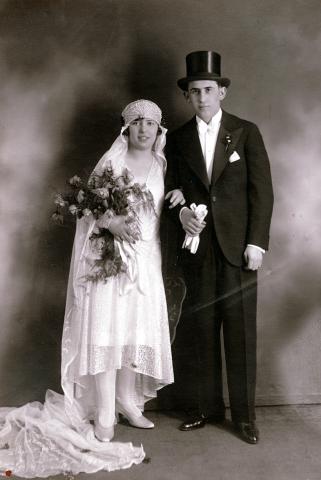
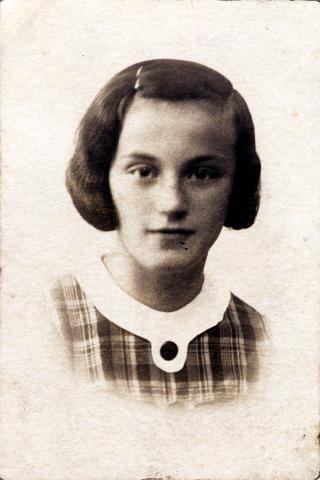
Emilia Leibel, nee Grossbart, was born in 1911 in Łagiewniki, a village that later became a district of Kraków. The family from her father’s side was large and lived in Kraków and in the area for many generations.
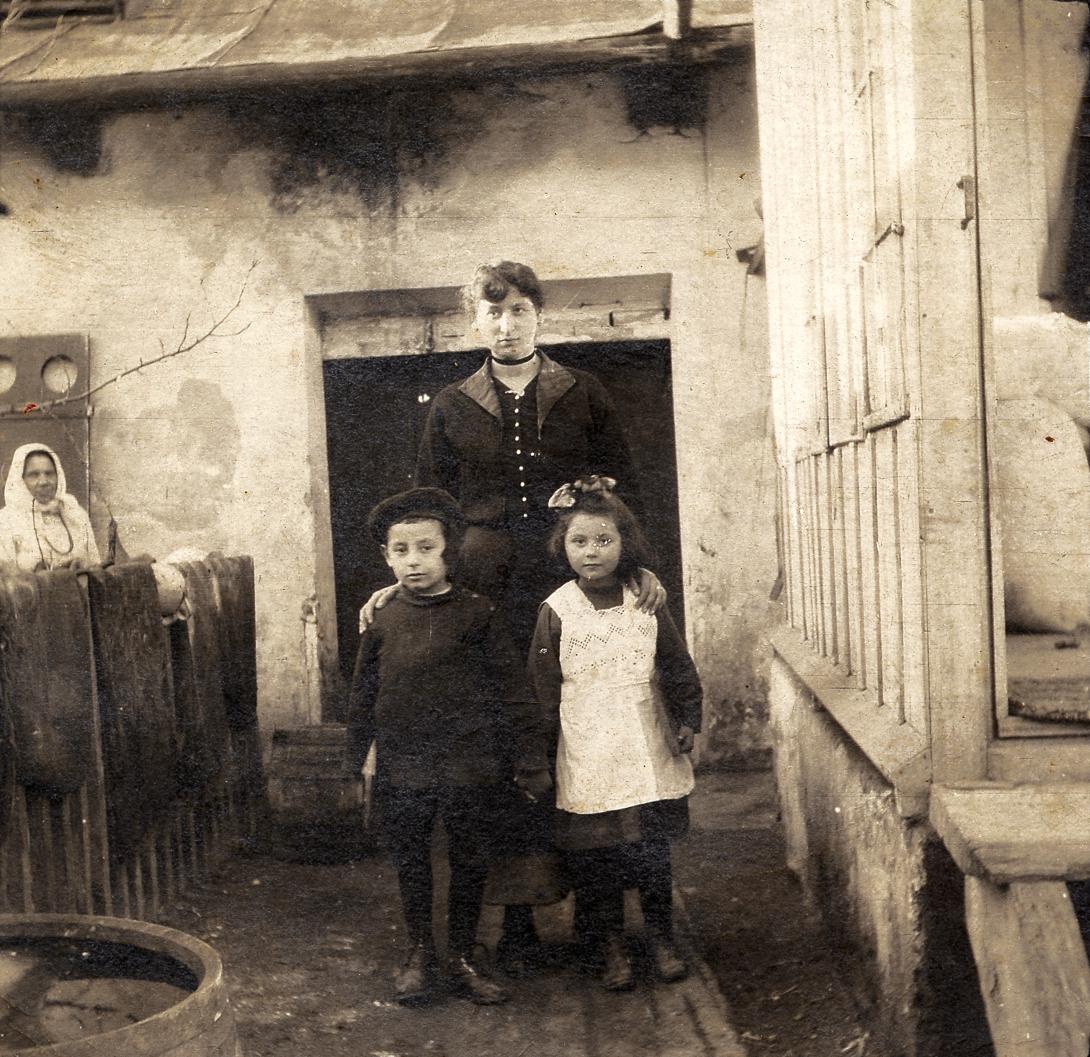
Emilia Leibel at the age of 4 with her mother Ester (Hadasa) Grossbart and brother Jehuda
Family and childhood
"The whole family traded in leather, skins: they bought up raw hides. My great-grandfather, grandfather, even my father was in the business. [...] I remember how my father used to go places and bring back cattle hides, or somebody would bring them to him. We had a big farmyard in Łagiewniki and I remember there was this brick drying house, coal- and wood-fuelled. When the hides came in – still fresh, or part dried, they would hang there on the poles to finish drying out. [...] My grandfather was a farmer as well, really. He had a vast estate – a working farm. Lots of fields. All the fields right down to the Wilga river, to Zaborze – all that was his property. In the summer, for the harvest, haymaking and potato digging, he would hire people. [...] I don’t know whether my great-grandfather built this house in Łagiewniki or bought it. What I do know is I was born there, but I was 5 years old when we moved away from there."
"Polish was spoken in my grandfather’s house. They knew Yiddish, grandfather even knew Hebrew, but for every day Polish was spoken. Only when Jews came, merchants, did I on occasion hear them speaking Yiddish. I knew it from listening rather than from learning. I understood it, but it wasn’t as though anyone ever taught me Yiddish. My grandparents spoke German, of course, because this was Galicia."
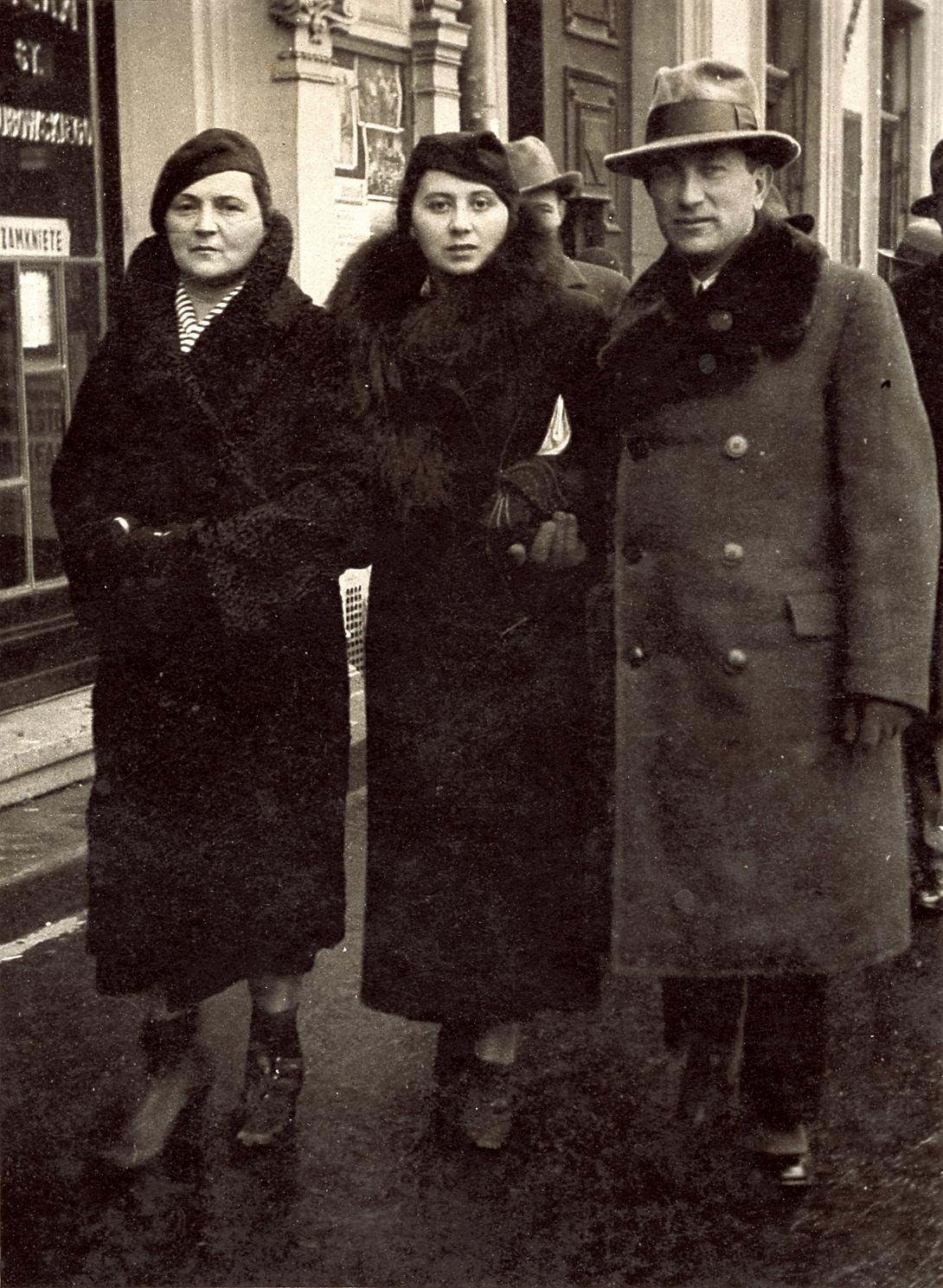
Emila Leibel with her parents Ester (Hadasa) and Bencyjon Grossbart
Religion
"In my grandparents’ family boys didn’t thrive, somehow. The sons died as children, and when my father was born, my grandfather, to assure him a future – at least that was what he believed – took my father to some tzaddik, I don’t know which one, some miracle-worker. He blessed him and gave him another name: Dziadek [Pol.: Grandfather]. So that he would live to see his own grandchildren, so that he could be a grandfather. My mother called her husband Grandfather. The children, my cousins – my father’s sisters had children – they called him ‘Uncle Grandfather.’"
"In my grandparents’ kitchen everything was kosher. There were separate dishes for meat and dairy. The cook was Jewish. We kept hens, chicks and turkeys. [...] All the festivals were celebrated at my grandparents’. [...] For Shabbas, the big table in the dining room was laid: white tablecloths, silver candlesticks, candleholders. And the candles were lit. We ate off a special service. [...]
My grandparents used to go to the synagogue to Podgorze on foot, because you weren’t allowed to use transportation on Saturday. On foot to the synagogue and on foot to funerals, because the Jewish cemetery was even further. The synagogue was Rabbi Skawinski’s, at Celna Street. My parents went to that synagogue too, but later Mama was thrown out of it, because she didn’t wear a wig. Those were personal things, all I know is that she stopped going to pray there, and that there was talk of it being because she didn’t wear a wig. And anyway, she only went to the synagogue at the festivals, but not on Saturdays. Father went on Friday evening and Saturday."
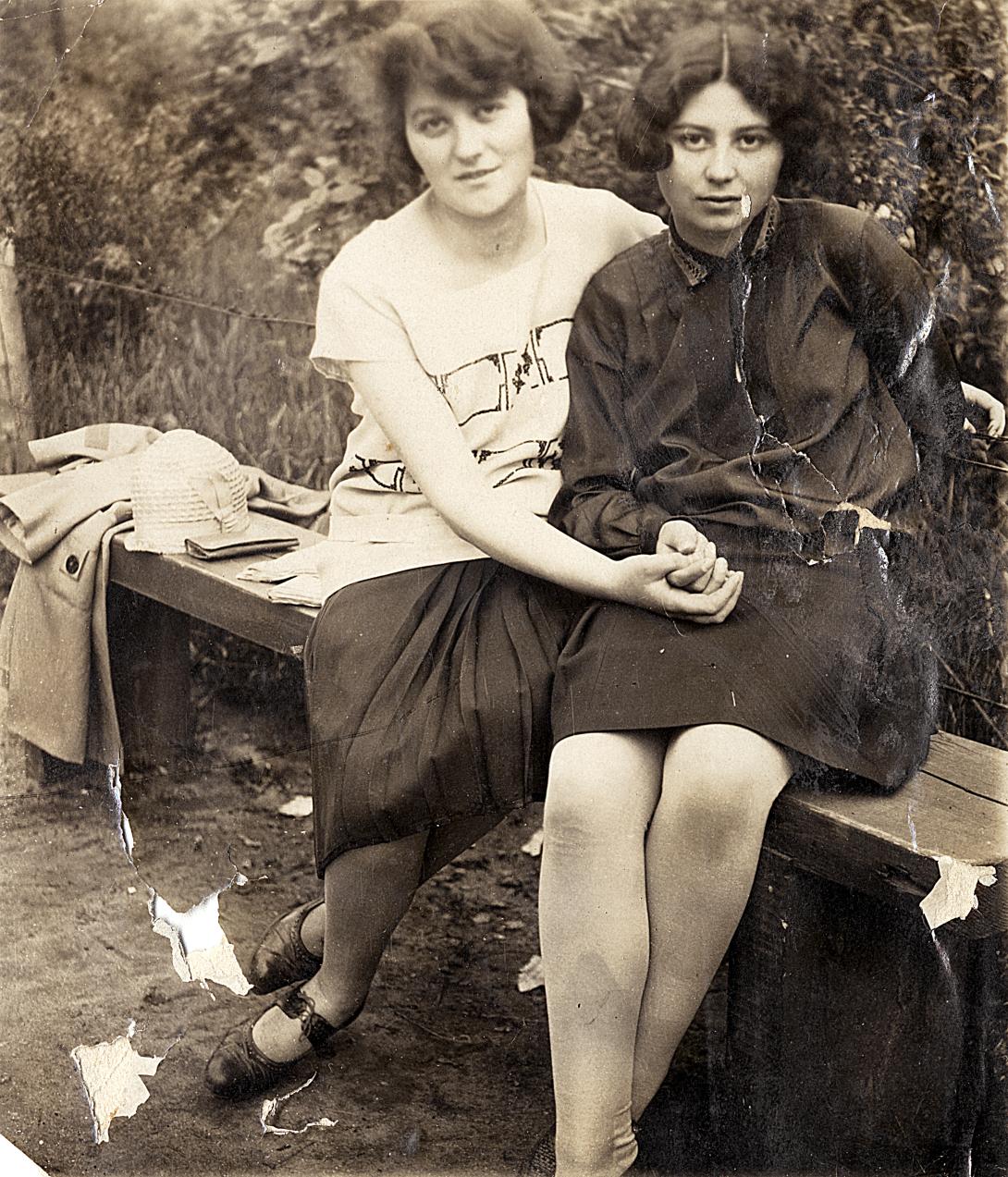
Emilia Leibel with her cousin Gusta from Debica
Education and growing up
"I went to a Polish elementary school in Podgórze, [...] Queen Kinga Common School, on Józefińska Street. I went to a public school, but my brother Jehuda went to a Protestant school, because there were small classes there – 15 people. That was a private school, whereas in a state school Father was always worried that someone might knock him over – he was an invalid. He was a cripple. Yes, Jews were taken in that school, there was no problem. That school was on Grodzka Street; to this day there is still a Protestant congregation there."
"We were in 5th grade at gymnasium, and I remember, it was appendicitis, Jehuda had an operation, and after that operation he died. In those days an operation on your appendix was a serious illness. My father had a complete breakdown. [...] When my brother died, my father lost his head, and that partner swindled him. And after that we had nothing, because my father lost everything. My father had been so jovial, so smiling, but after my brother’s death all the life went out of him. For a long time. Always, really."
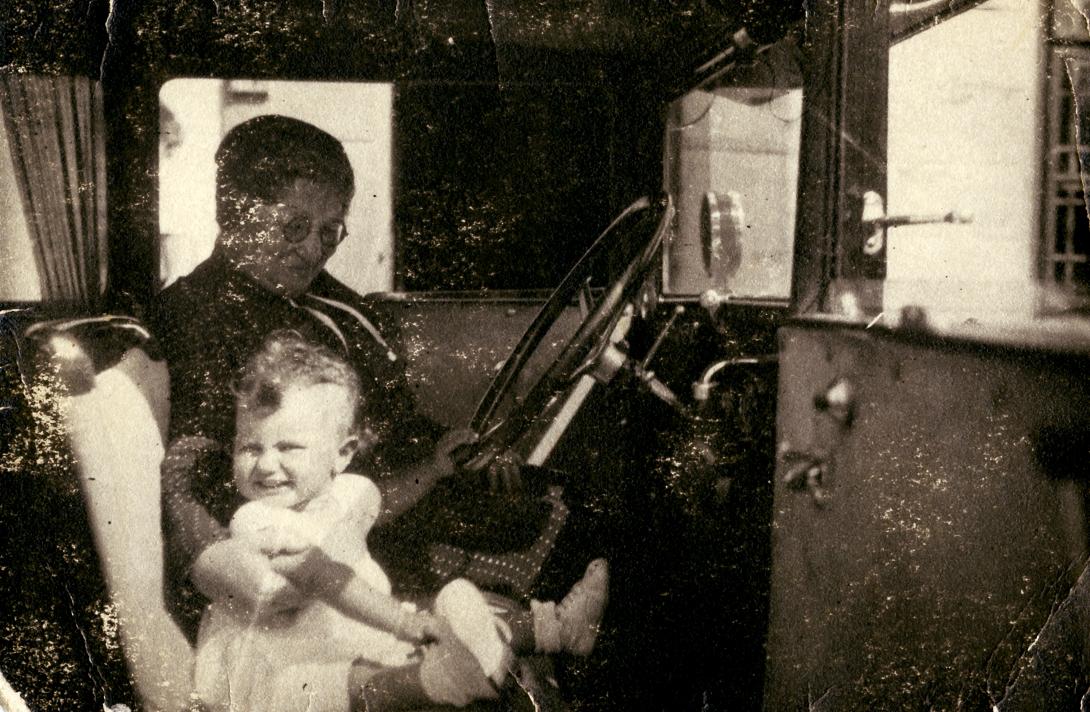
Emilia Leibel’s daughter Halina and mother-in-law Anna Leibel
Adult life
"Julek was an independent leather exporter, and my father was a modest Jew, bought the hides himself and then dispatched them. And I was completely surprised and amazed when one day my mother called me into the dining room, where my distant uncle was sitting, the father of my future husband, and Mother said that he’d come to ask whether I would marry Julek. And I was speechless. I said that of course I would. He liked me, and that was it. He even bought me a trousseau. He didn’t buy it, he gave Father money, so that nobody would know, and Mother got me some linens together, what I had to have, so that I’d have a trousseau."
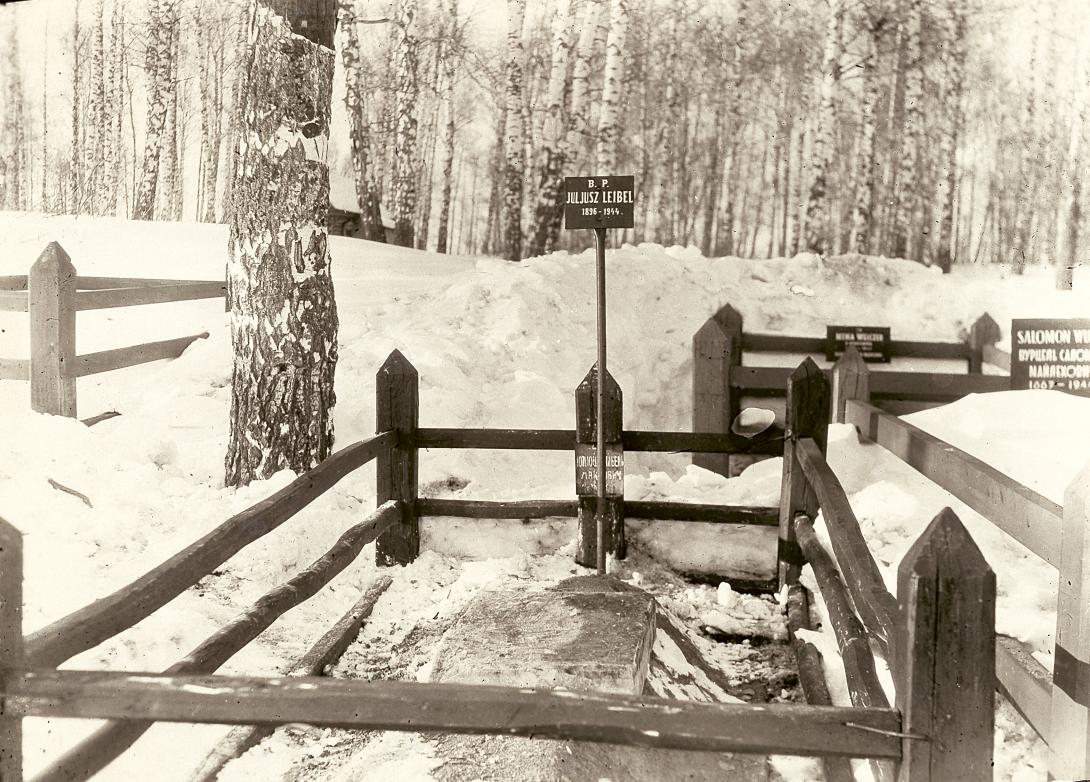
The grave of Emilia Leibel’s husband Juliusz in Koz'modem'yansk
Wartime
"Back in Kozmodemyansk I’d gotten a letter from a very close friend of mine, a schoolfriend, Karola Wetstein, whose son was the same age as my daughter. She wrote me that she had survived the camps, and that she was starting over from nothing in Kraków. She had her own house on Starowiślna Street, and when she came out of the camp and retrieved her son, and found her brother (he had been in the camps somewhere, too), they moved back into their apartment on Starowiślna.
She wrote me also that my parents were dead, that they’d perished in the last-but-one deportation from Podgórze – the ghetto had been in Podgórze. [...] I have no family. After the war it was just me and my daughter. My parents had perished. Karola wrote also that when I came back to Poland, to Kraków, that I should head for her place, simply because I would find shelter with her."
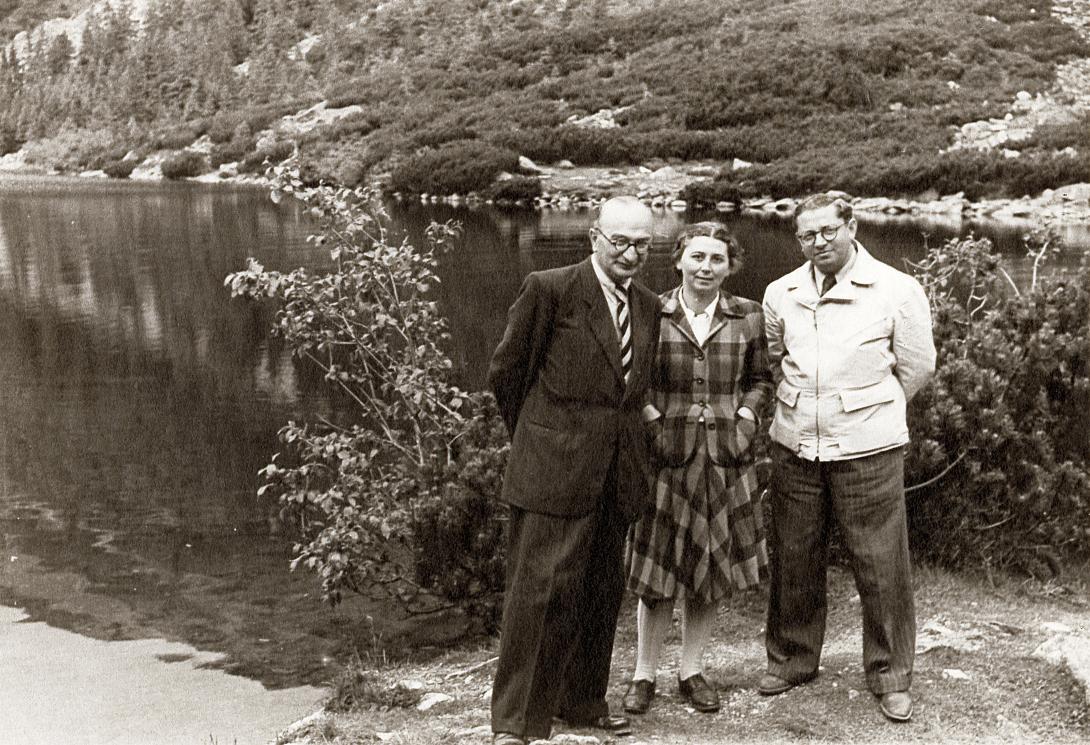
Emilia Leibel with her boss Dawid Erdestein, director of the Jewish Children’s Home in Cracow
After the war
"We got a whole 4-story building, where the Jewish Children’s Home was opened. Kraków, 1 Augustianska Boczna Street [now 6 Chmielowskiego Street] was the address. [...] There was even a time when there were 130 children in the children’s home – that’s the maximum number I’m giving, because after that there were more or less 70-80, or 80-something. It varied. Of them, there were about 20-30 of the little ones, the under 3’s in the nursery. They lived up on the 4th floor, they had their own nurses up there. [...] And downstairs we had a kindergarten, from 4 to 6 years old. And other than that we had children even up to school-leaving age. I didn’t live in the same room as my daughter, she was with the other children. [...] I was fired on the pretext of smuggling children to Israel. Somehow they found out that I corresponded with relatives in Israel, which means somebody must have informed on me. They knew I was a Zionist, and that I had never been a communist. I worked there for 5 years, so it must have been 1951 or 1952 when they fired me."
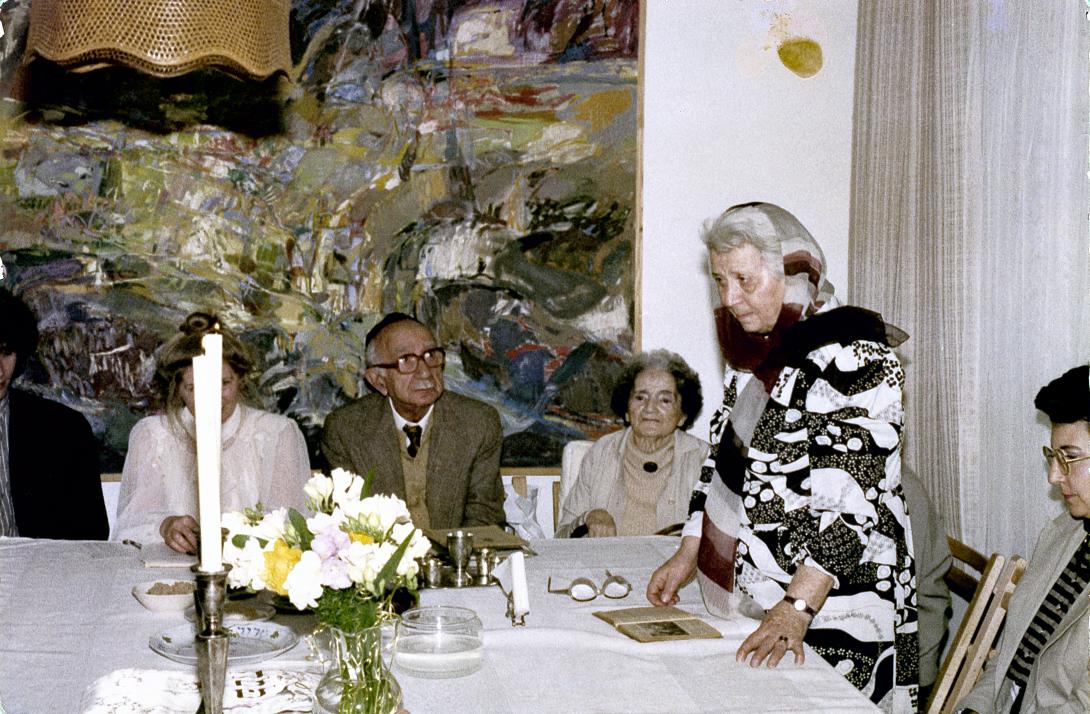
Emilia Leibel at her Polish friends’ home during Pesach festivities
Post-war life
"Yes, I must say I keep in touch with the children from the children’s home. Paulina, who lives in Brussels, is always calling me – she phoned me a few days ago. I even have a photograph of her grandson. I went to stay with her a few times. The other one, her sister Dora, lives in Paris, and I went to stay with her too. Just now I got a card from one of the girls in the children’s home for Jewish New Year. And best wishes. It’s very nice that the children remember me and come to visit me."