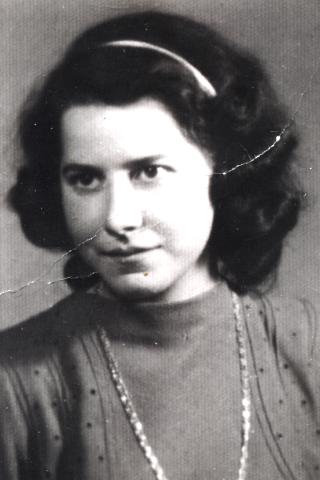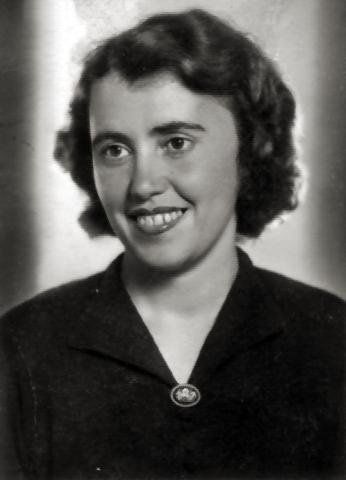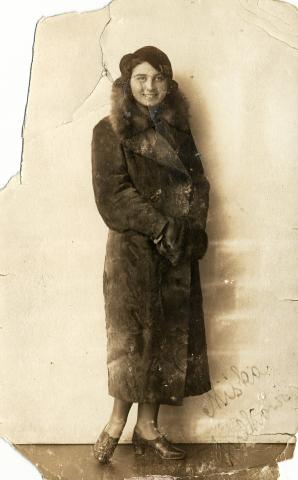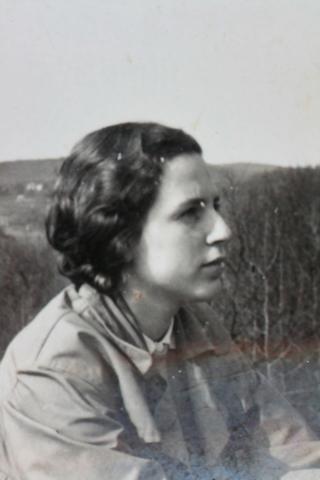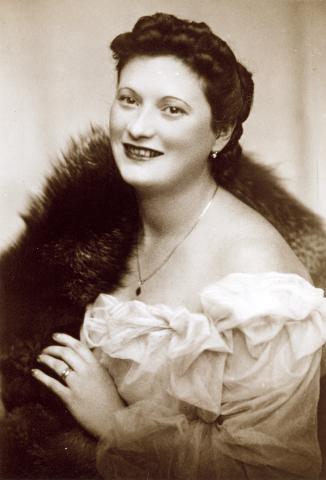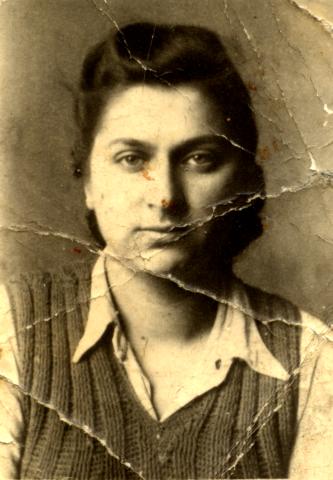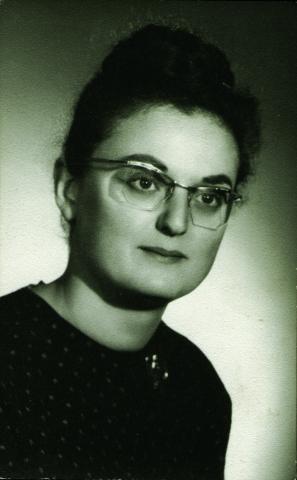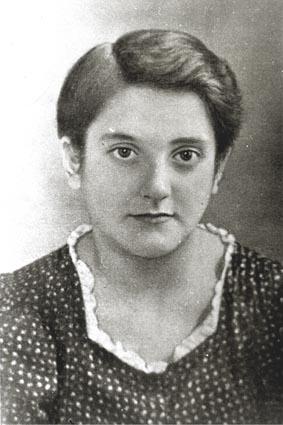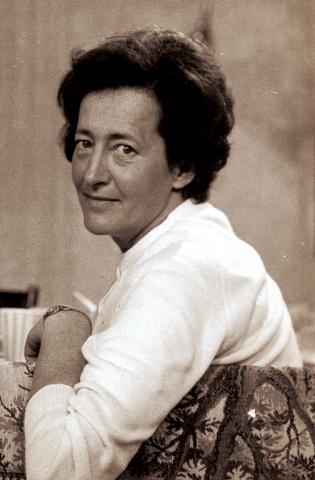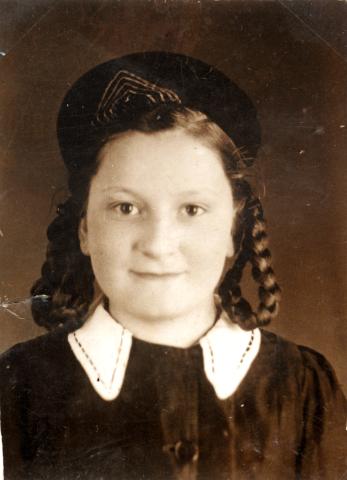
Matilda Cerge
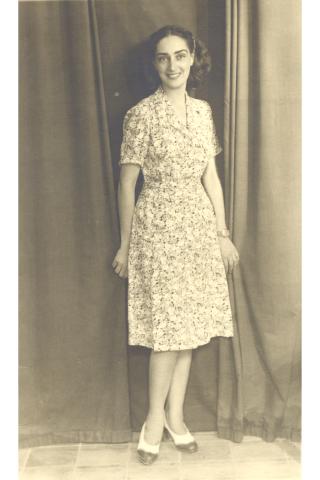
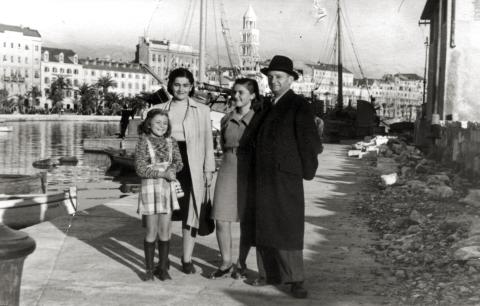
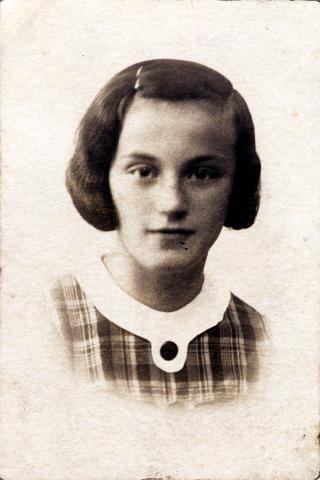
Matilda Cerge was born in 1929 in Belgrade, to the Kalef family, among Belgrade's oldest Sephardic Jewish families. She lived in the Dorćol neighborhood which was culturally diverse and predominantly Jewish.
Biography of Matilda Cerge
Matilda Cerge, born Matilda Kalef in Belgrade in 1929, belongs to a generation of Serbian Jews whose lives were permanently shaped by the Holocaust and the destruction of Jewish life in Yugoslavia during the Second World War. Through her testimony, it is possible to reconstruct not only the tragedy of wartime persecution, but also the vibrant Jewish culture that once existed in Belgrade, especially in the historic neighborhood of Dorćol.
Her life story combines memories of a warm and culturally rich childhood, the suffering and uncertainty of war, and the difficult process of rebuilding life after the Holocaust. At the same time, Matilda’s memories reveal the resilience of ordinary people — especially women — who fought to protect their families under impossible circumstances.
Throughout her life, Matilda remained strongly connected to the Jewish community of Belgrade and preserved the memories of a world that almost completely disappeared during the war. Her testimony today serves as both a personal narrative and an important historical source about Jewish life in Serbia.
Family Origins and Sephardic Heritage
Matilda came from a long-established Sephardic Jewish family whose roots in Belgrade stretched back more than two centuries. According to family tradition, her ancestors had originally fled Spain after the expulsion of Jews in the fifteenth century and eventually settled in the Balkans through the Ottoman Empire. The family lived primarily in Dorćol, the traditional Jewish quarter of Belgrade.
Dorćol before the Second World War was a lively and multicultural neighborhood where Jews, Serbs, and people from other communities lived closely together. Jewish families often lived on streets such as Gospodar Jovanova, Solunska, and Visokog Stevana. Matilda emphasized that this was not a ghetto, but rather a voluntary concentration of Jewish life shaped by tradition, family ties, and community institutions.
Her family belonged to the middle-class merchant community. The Kalef family owned property and apartments, and several generations lived close to one another. Family life revolved around strong relationships between relatives, neighbors, and the Jewish community itself.
Matilda especially remembered her grandmother, also named Matilda, as the central figure of the household. Her grandmother became widowed at a young age and spent her life holding the family together through difficult circumstances. She managed the family property, cared for relatives, supervised the household, and preserved Jewish traditions.
The grandmother woke up before dawn every morning, prepared coffee, went to the market, organized meals for a large household, and personally oversaw all domestic matters. Matilda remembered her as a strong and energetic woman with beautiful long hair, always elegantly dressed, and deeply respected by everyone around her.
Although deeply attached to Jewish identity, the family also strongly identified with Serbian culture. They spoke Serbian fluently, respected Serbian customs, and considered themselves loyal citizens of the country. According to Matilda, Jewish and Serbian traditions coexisted naturally in everyday life before the war.
Childhood and Family Life
Matilda was born prematurely after only seven months of pregnancy. At that time there were no incubators, and her survival depended entirely on traditional care at home. Her grandmother covered her with goose fat, wrapped her in cotton, and kept her near the stove to keep her warm. She was fed with a tiny spoon, one drop at a time. Despite her difficult beginning, she survived and later even received recognition at a children’s health clinic as one of the healthiest developing children.
She grew up with her younger sister Rahela, whom the family called Ela. The two sisters were very close, although they often argued and competed with one another as children. Matilda described her sister as lively, dramatic, and always eager to be the center of attention. Together they sang songs, recited poems during family gatherings, and entertained guests during Jewish holidays such as Purim.
The Kalef household was large and lively. Several domestic workers, seamstresses, caretakers, and tenants were connected to the family home. Meals were often shared by many people together, creating an atmosphere of warmth and community.
Her father, Avram Kalef, played an especially important role in her life. Although seriously ill for many years, he remained intellectually active, humorous, and emotionally devoted to his daughters. He suffered from diabetes and muscular atrophy and became one of the first people in Belgrade to use a wheelchair.
Despite his illness, he educated himself constantly, read newspapers in several languages, and spent time in French and German reading rooms. He spoke several languages fluently and was admired for his intelligence and storytelling abilities. Matilda remembered him as a loving father who never raised his voice and who devoted much time and affection to his children.
Her mother, Antonija Ograjensek, came from Slovenia and was not Jewish. Her marriage to Avram initially caused tension within the traditional Jewish family, which opposed mixed marriages. However, Avram insisted on marrying her, and eventually the family accepted her. During the war, Antonija’s courage and determination would become essential for the survival of the family.
Education and Jewish Community Life
Matilda attended public schools in Belgrade together with Jewish and Serbian children. She first went to elementary school on Kralja Petra Street and later attended the Fourth Women’s Gymnasium in Dorćol.
She remembered school life before the war as peaceful and free of antisemitism. Jewish and Serbian children studied together naturally, and friendships between them were common. One of her childhood friends, a Jewish boy named Zak, used to bring her flowers every day on the way to school. He was later killed during the Holocaust.
In addition to regular school, Jewish children attended religious classes organized by the Jewish community. These classes took place in the Jewish Community building on Kralja Petra Street. There, children learned about Jewish traditions, the Old Testament, and Hebrew.
Matilda remembered these gatherings with great affection. Even later in life, she loved visiting the same building because it reminded her of childhood and the strong sense of belonging she had once felt within the Jewish community.
Jewish holidays were celebrated with joy and togetherness. Purim parties, family gatherings, songs, and traditional food formed an important part of her early memories. The family also maintained close relations with neighbors of different backgrounds. According to Matilda, people respected each other’s traditions and holidays in a way that later generations often failed to preserve.
The War and Destruction of Jewish Life
The German occupation of Yugoslavia in 1941 completely destroyed the peaceful world of Matilda’s childhood. She was only eleven years old when anti-Jewish persecution began.
The family was expelled from their apartment after German officers arrived and ordered them to leave. During one terrifying confrontation, a German officer threatened to shoot her father after he protested against the eviction. Her mother intervened desperately and managed to calm the officer before tragedy occurred.
Because her father was Jewish and disabled, the family became especially vulnerable. Her mother quickly hid Matilda and her sister in Banovo Brdo with the help of a Catholic priest, Andrej Tumpej, who helped shelter Jewish children during the occupation.
Life in hiding was marked by hunger, fear, uncertainty, and constant danger. Matilda’s mother struggled daily to find food, often traveling to villages to trade goods illegally. Sometimes she slept in pigsties because curfews prevented her from returning home safely at night.
Meanwhile, Matilda’s father and grandmother were arrested together with other Jews. Her mother made desperate attempts to help them by bringing food and supplies. Eventually she managed to arrange one final meeting between the children and their father.
Matilda never forgot his final words to her mother: “Protect my children. Take care of my children.” Those words became a guiding principle for the family throughout the war.
Soon afterward, her father and grandmother were transferred to the Jewish hospital in Belgrade. From a nearby apartment, hidden behind curtains, Matilda and her sister watched as Jews were loaded into trucks and taken away. It was the last time they saw them alive.
The Holocaust destroyed most of the Jewish world Matilda had known. Friends, neighbors, relatives, and classmates disappeared. Entire families were murdered.
Survival and Postwar Difficulties
Despite terrible hardship, Matilda, her sister, and mother survived the war. Their survival depended largely on the courage, intelligence, and determination of her mother.
Before leaving their apartment, her mother carefully hid family photographs, documents, and religious objects in the attic. Thanks to her actions, important traces of the family’s history survived the war even after the apartment was looted and partially burned.
When the war ended in 1945, the family returned home hoping to rebuild their lives. Instead, they discovered that much of their property had been stolen or occupied by others. Furniture and belongings had disappeared, apartments were taken over, and the new communist authorities nationalized most private property.
Although the family had once owned a large home, they were allowed to live only in a tiny section of it. For decades Matilda’s mother lived under humiliating conditions, sharing communal facilities and struggling to reclaim even basic dignity.
These postwar years were emotionally painful because the family had survived the Holocaust only to encounter new forms of injustice and hardship. Nevertheless, they slowly rebuilt their lives.
Later Life and Connection to Memory
As an adult, Matilda remained deeply attached to Jewish communal life. She continued participating in activities at the Jewish Community of Belgrade, where Holocaust survivors gathered regularly to socialize, exercise, and share memories.
She loved reading, gardening, and caring for her home. Even in old age, she remained independent and active. Her garden, flowers, and pets brought her peace and comfort.
Matilda often reflected on the destruction of the world she had known as a child. She believed that prewar coexistence between different peoples in Belgrade had once been based on mutual respect and understanding. In her view, the war destroyed not only lives but also the harmony that once existed between communities.
At the same time, she emphasized the importance of preserving memory and telling stories about the past. For her, remembering those who disappeared during the Holocaust was both a personal responsibility and a moral obligation.
Historical Importance of Her Testimony
Matilda Cerge’s biography provides a deeply human perspective on Jewish life in Serbia before, during, and after the Holocaust. Her testimony preserves details of everyday life that are often absent from official historical records: family routines, neighborhood relationships, school memories, celebrations, fears, and emotional bonds.
Through her memories, one can better understand both the richness of Sephardic Jewish culture in Belgrade and the devastating consequences of Nazi persecution. Her life story also highlights the courage of women like her mother and grandmother, whose strength and sacrifice allowed families to survive impossible circumstances.
Most importantly, Matilda’s testimony reminds future generations that behind every historical tragedy stand individual human lives, memories, and families. Her story is not only about suffering, but also about resilience, dignity, love, and survival.